

SCIENCE AND CINEMA
IMAGINING THE FUTURE
10TH JUNE 2025
AUDITORIUM OF THE ARA PACIS MUSEUM - ROME
As part of the series of talks that the Carla Fendi Foundation has dedicated for several seasons to exploring the connection between science and creativity, the Foundation presented an event created and narrated by Antonio Monda, television guest, professor in the Film and Television Department at New York University, and contributor to several newspapers and magazines. Weaving stories through film clips, Antonio Monda revealed how science in cinema has always found fictional worlds where the future has been imagined by pursuing, and sometimes anticipating, new technological breakthroughs. From Metropolis by Fritz Lang to 2001: A Space Odyssey, passing through Kubrick’s A Clockwork Orange, The Truman Show by Peter Weir, Il Casanova by Fellini, Blade Runner by Ridley Scott, and many other films up to Ready Player One by Steven Spielberg, the narrative spanned different eras of cinema.
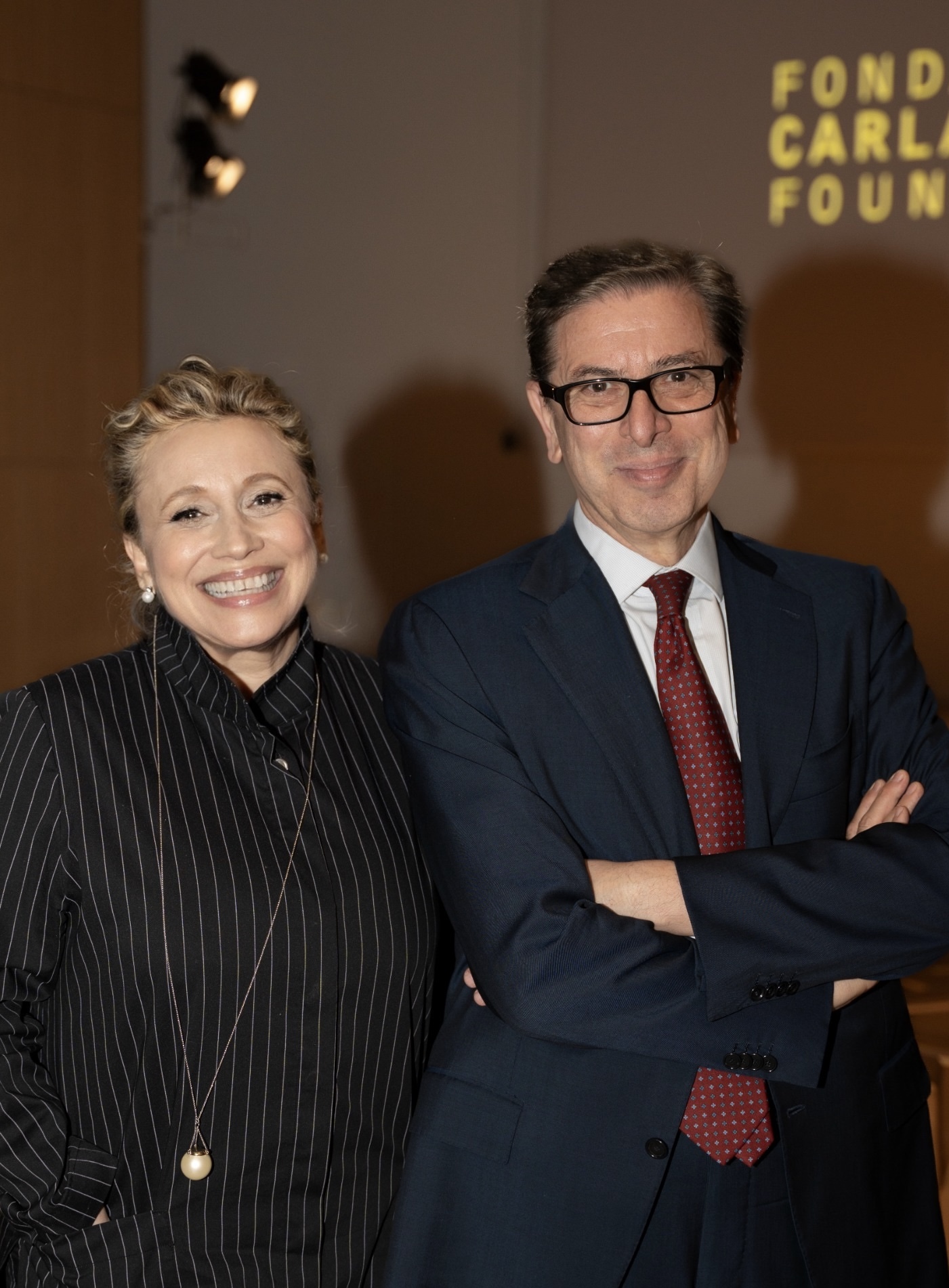
Antonio Monda
Exploring various topics from science fiction to robotics and Artificial Intelligence, fantastic or terrifying sequences, ironic or fairytale-like, were shown on screen, portraying a Future that has now become the Present, in a prophetic journey where films have surprisingly anticipated tools and environments that today characterize our everyday lives. After a prologue focused on films that have now become iconic, the presentation showed a series of film excerpts that offered insights into a range of themes: from technological innovation to virtual reality, from ethical dilemmas to the interplay between eros and machines, from futuristic comedy to natural disasters, and the perennial — but now more pressing than ever — issue of fake news.
In Monda’s narrative, it is fascinating to see how the different sensibilities of very diverse artists have tackled, across various genres, eternal themes such as the relationship between the individual, the community and institutions, and the ambition — much more often the illusion — of shaping and controlling the future. No image, Monda believes, summarizes as powerfully the relationship between the enthusiasm for technological and scientific progress and the realization of what Friedrich Nietzsche called “the eternal return of the same,” as the famous scene of the bone turning into a spaceship in 2001: A Space Odyssey. All of Stanley Kubrick’s genius is contained in that formidable directorial intuition: a simple editing cut transports the viewer from a past thousands of years ago, where some primates confront each other with brutal and primal violence, to a future in which everything appears calm and perfectly under control, but where violence will inevitably return, this time by the onboard computer HAL 9000.

METROPOLIS, Fritz Lang (1927)
PLAYTIME, Jacques Tati (1967)
2001: A SPACE ODYSSEY, Stanley Kubrick(1968)
A CLOCKWORK ORANGE, Stanley Kubrick (1971)
SLEEPER, Woody Allen (1973)
SOYLENT GREEN, Richard Fleischer (1973)
CHINATOWN, Roman Polanski (1974)
IL CASANOVA, Federico Fellini (1976)
THE LAST WAVE, Peter Weir (1977)
CAPRICORN ONE, Peter Hayms (1978)
IO E CATERINA, Alberto Sordi(1980)
AIRPLANE!, Zucker /Abrahams /Zucker (1980)
BLADE RUNNER, Ridley Scott (1982)
DICK TRACY, Warren Beatty (1990)
SAFE, Todd Haynes (1995)
GATTACA, Andrew Niccol (1997)
WAG THE DOG, Barry Levinson (1997)
THE TRUMAN SHOW, Peter Weir (1998)
THE MATRIX, Andy & Larry Wschowski (1999)
MINORITY REPORT, Steven Spielberg (2002)
S1IMONE, Andrew Niccol (2002)
WALL-E, Andrew Stanton (2008)
CONTAGION, Steven Soderbergh (2011)
HER, Spike Jonzie (2013)
READY PLAYER ONE, Steven Spielberg (2018)