EXPLORING ART
24TH JUNE - 10TH JUL 2021
SPOLETO64 FESTIVAL DEI DUE MONDI
An artistic journey through the heart of Spoleto, revealing the cultural legacy of Sol LeWitt and Anna Mahler as it interacts today with contemporary artworks and creative expressions. On the occasion of Spoleto64 Festival dei Due Mondi, and in collaboration with the Mahler & LeWitt Studios — created by Marina Mahler, daughter of Anna, and Carol LeWitt, wife of Sol, and curated for many years by Guy Robertson — the Foundation presented EXPLORING ART, a contemporary art event spread across multiple locations throughout the streets and squares of Spoleto’s historic centre.
.png)
CASA MAHLER
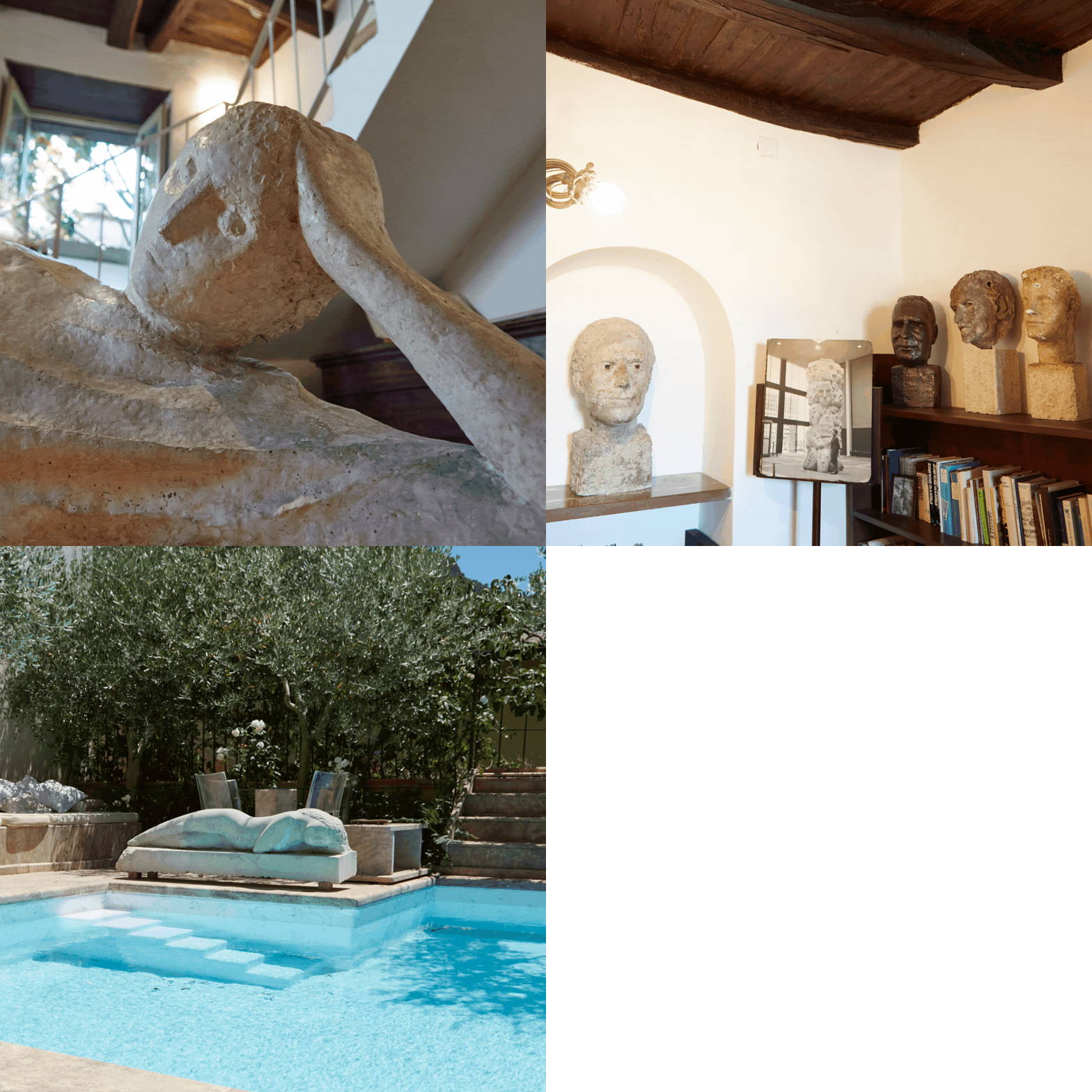
The itinerary began at Casa Mahler, once the studio of sculptor Anna Mahler, daughter of Gustav Mahler and Alma Schindler. Anna began her career as a painter in Rome under the guidance of Giorgio de Chirico, but soon realised that her true artistic path was stone sculpture. Between 1969 and 1987, in the courtyard of this home-studio, she created her works using large stone blocks, from which she carved surprising and enigmatic forms, undulating like landscapes. Today, the studio has become an elegant villa, serving as the vibrant centre of the Mahler & LeWitt Studios’ workshops, conferences, and residencies. Visitors are welcomed by the monumental Figura che cammina (Walking Figure, 1966) and can discover throughout the house other stone sculptures, plasters, busts, as well as her tools and workbenches. One room houses the archive, containing photographs of Anna’s life and family, correspondence, invitations to exhibitions, and catalogues. The music room — currently used by resident composers — preserves the Steinway grand piano once belonging to her mother Alma, herself a composer.
SOL LEWITT’S STUDIO
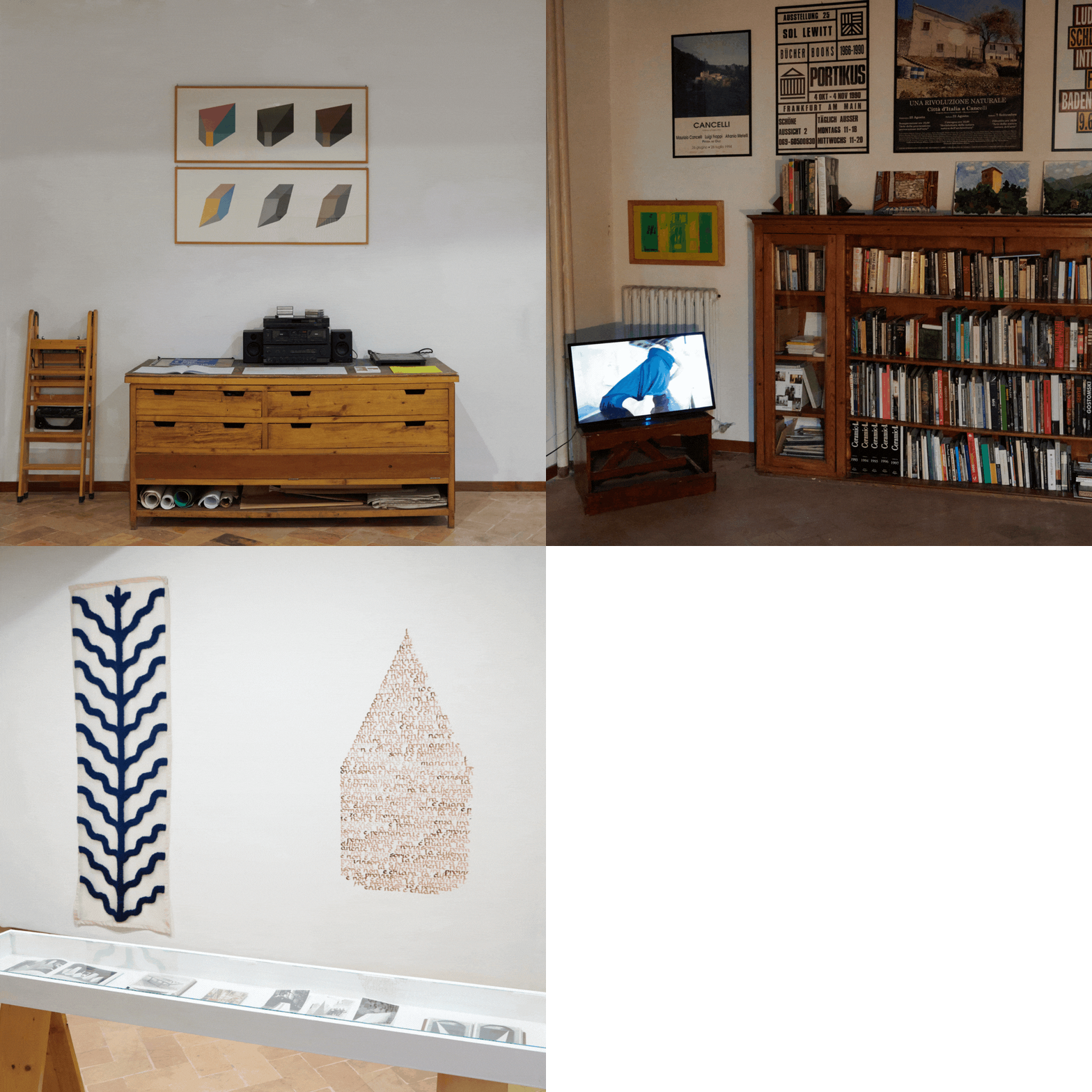
The second stop of the itinerary was Sol LeWitt’s studio. Sol worked here for many years starting in the late 1960s. The studio overlooks a courtyard surrounded by several apartments where the Studios’ resident artists now live and work. Displayed in this space were some of LeWitt’s drawings, a collection of posters, his library, archival materials, publications, and photographs from the period he lived in Spoleto — alongside works created by resident artists who have used the studio for their own practice.
QUASI-BOOK
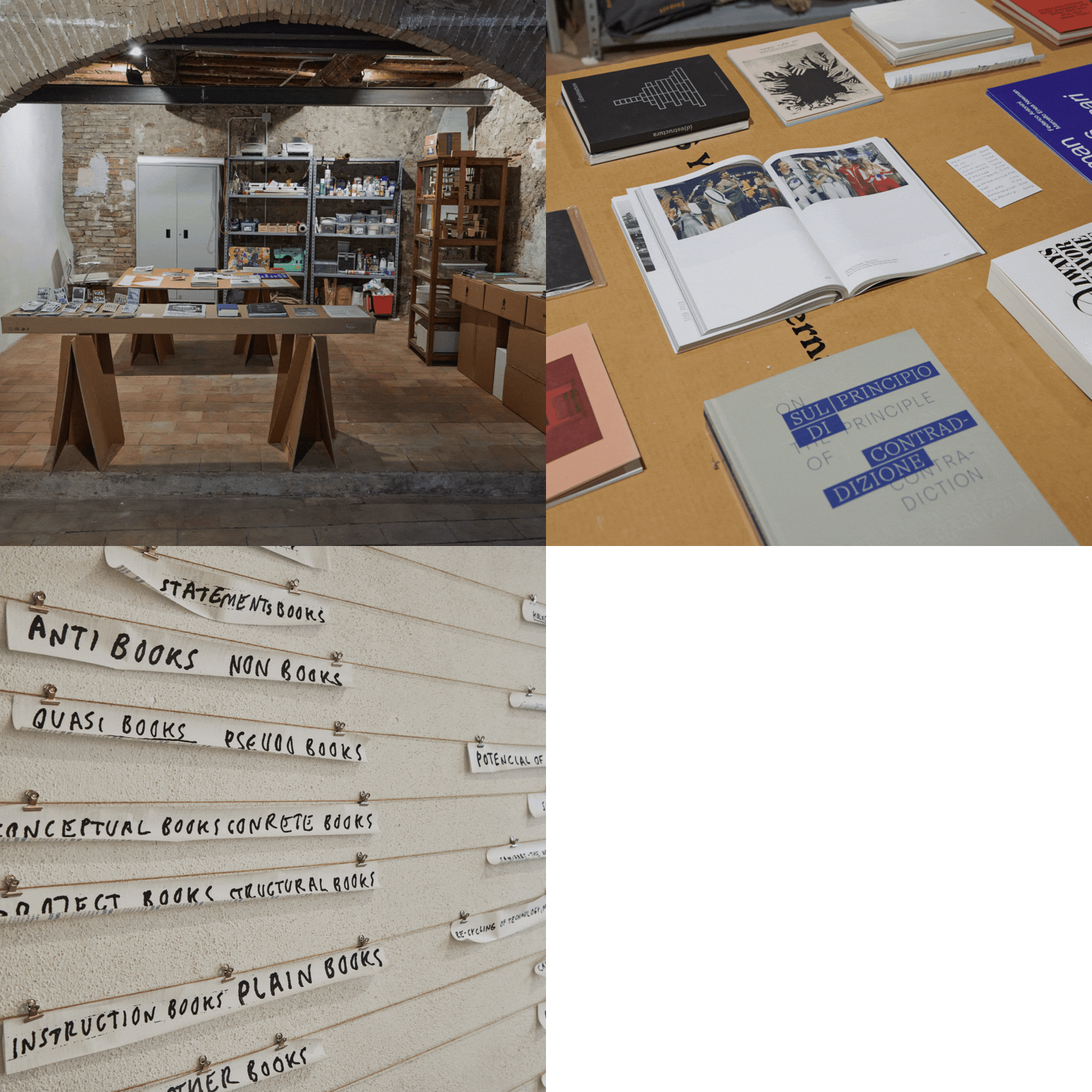
Next came Quasi-Book, produced in collaboration with Viaindustriae, a group dedicated to contemporary experimental publishing. Quasi-book was conceived as a hybrid space hosting events and exhibitions, running a bookshop, and serving as a platform for presenting and contextualizing artists’ publishing projects. The connection with Sol LeWitt’s studio is significant: LeWitt considered the book itself a form of art, and he was also a prolific publisher and co-founder of Printed Matter in New York.
TORRE BONOMO
In the heart of the Roman city stands the medieval Torre Bonomo, which entered the Mahler & LeWitt Studios program in 2016 through a collaboration with gallerist Valentina Bonomo. Here, the solo exhibition of Rä di Martino, Allunati, was presented alongside works by other resident artists. Valentina’s mother, Marilena Bonomo, a passionate avant-garde gallerist, chose the Tower as the distinctive venue for contemporary art exhibitions, hosting between 1976 and 1993 works by important artists such as Giulio Paolini, Richard Tuttle, and Jannis Kounellis. Many left behind site-specific artworks that remain in the Tower today, including Sol LeWitt, its very first resident. Using the Tower as his studio, LeWitt created a group of wall drawings in the old kitchen, still offering a unique testimony to his artistic production.
.gif)
NEON HIEROGLYPH BY TAI SHANI
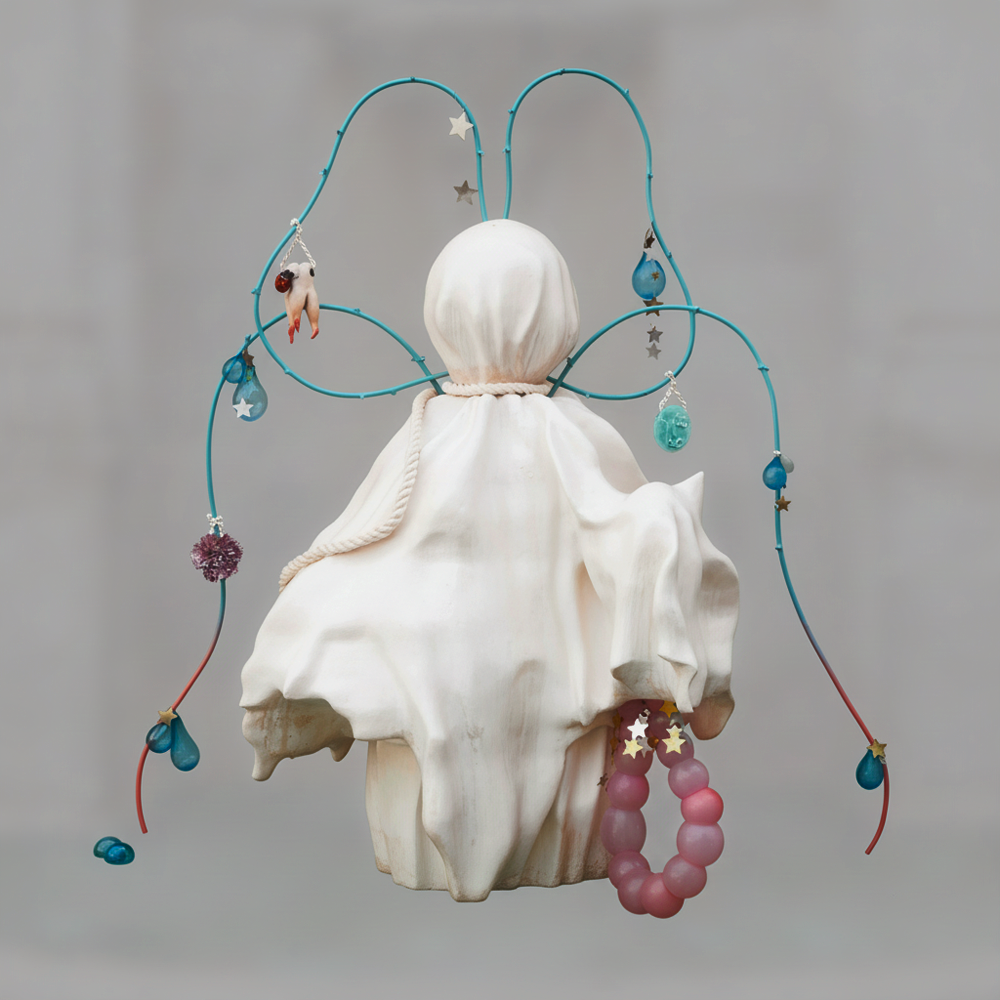
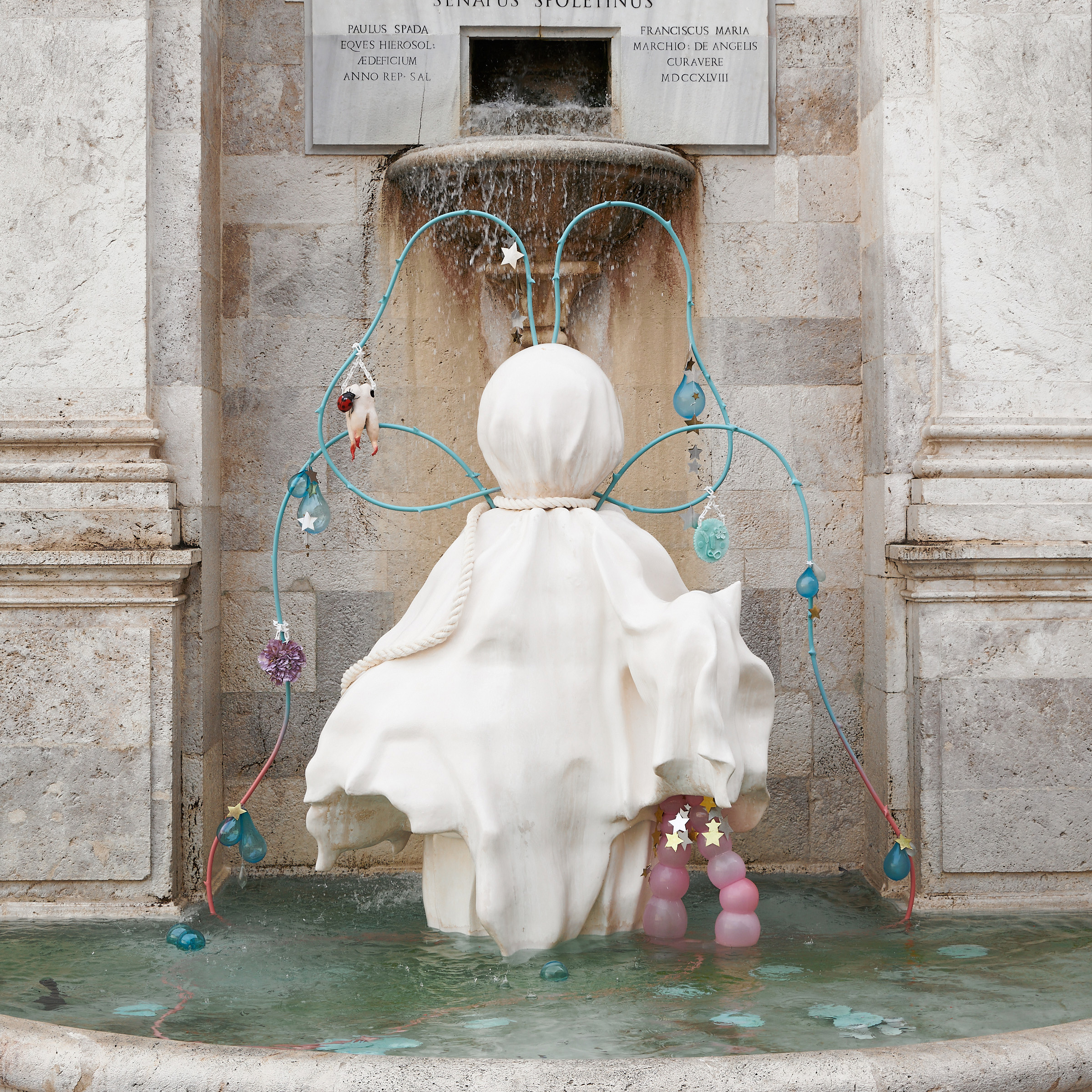
Arriving at Piazza del Mercato, the grand baroque fountain became the setting for The Neon Hieroglyph, a monumental sculptural installation by British artist Tai Shani, Turner Prize winner, produced by the Carla Fendi Foundation and the Mahler & LeWitt Studios. Depicting an enigmatic ghost adorned with tears and protective charms, the work draws from Shani’s research into psychedelia, feminism, and myth. It forms part of The Neon Hieroglyph, a series of poetic reflections on the history of ergot, the fungus from which LSD derives. Once growing among European grain crops, ergot could unknowingly be consumed, provoking visions, hallucinations, and stories of mysticism, esotericism, and ghosts — material that Shani collects and reimagines in her artistic project.
TRIBUTE TO SOL LEWITT – WALL DRAWING
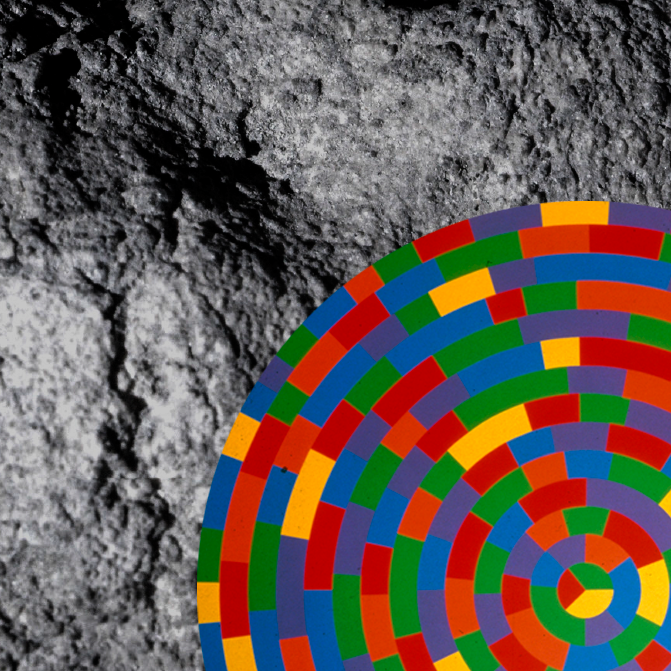
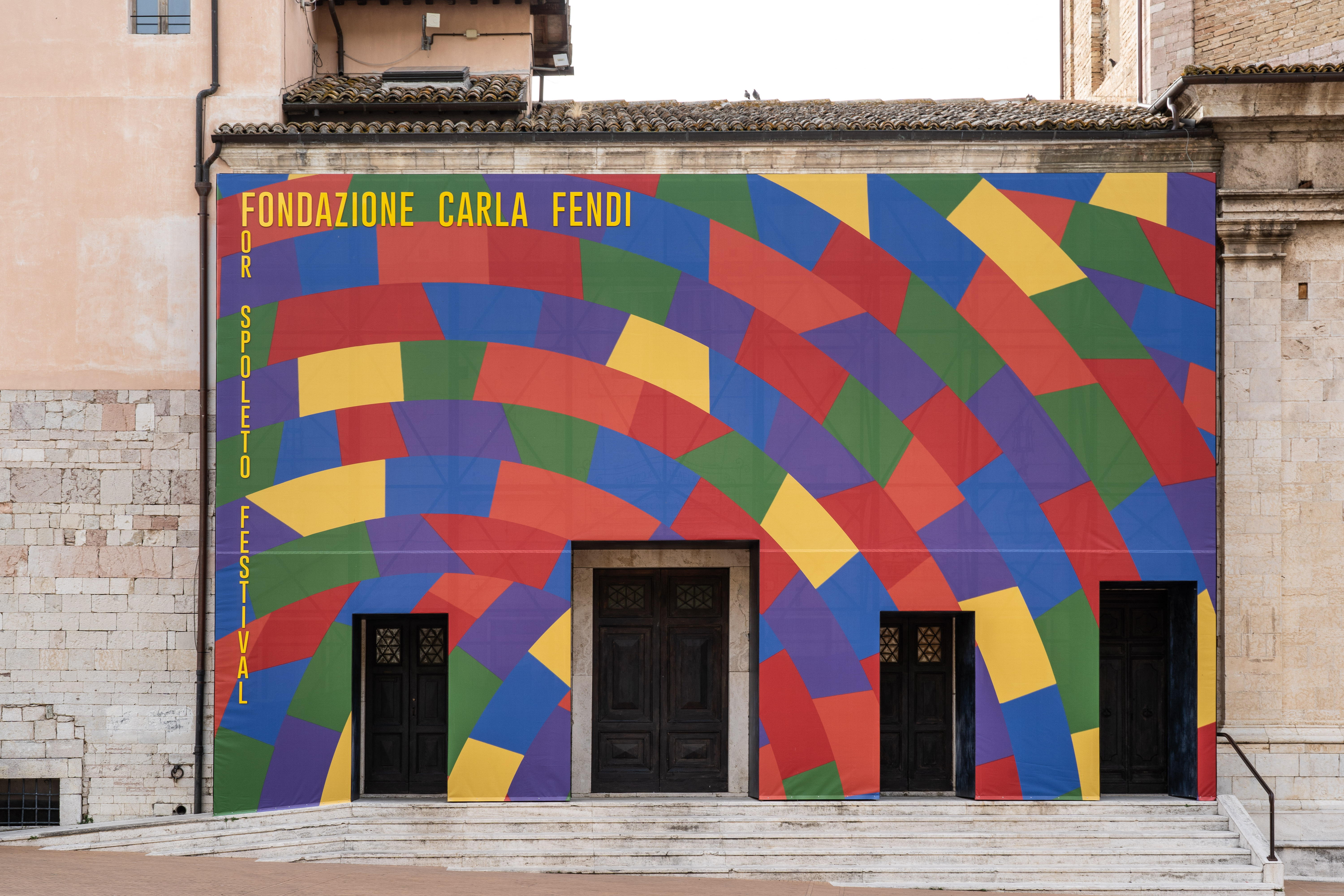
As part of Exploring Art, the Foundation wished to highlight the independent yet parallel roles that the American artist Sol LeWitt and the sculptor Anna Mahler played on Spoleto’s artistic and cultural scene. LeWitt, a recognized master of wall drawing and conceptual art, was celebrated with a large mural on the façade of the Caio Melisso Carla Fendi Theatre: an enlarged detail of Wall Drawing#1119, whose distinctive geometries and vivid colors have lent a contemporary character to the buildings overlooking Piazza del Duomo. Mahler, daughter of Gustav Mahler and Alma Schindler, a tormented sculptor of monumental stone works who once worked in the studio that is now the Casa Mahler, was commemorated with the sculpture Listening, displayed in the theatre’s foyer.
PALAZZO COLLICOLA
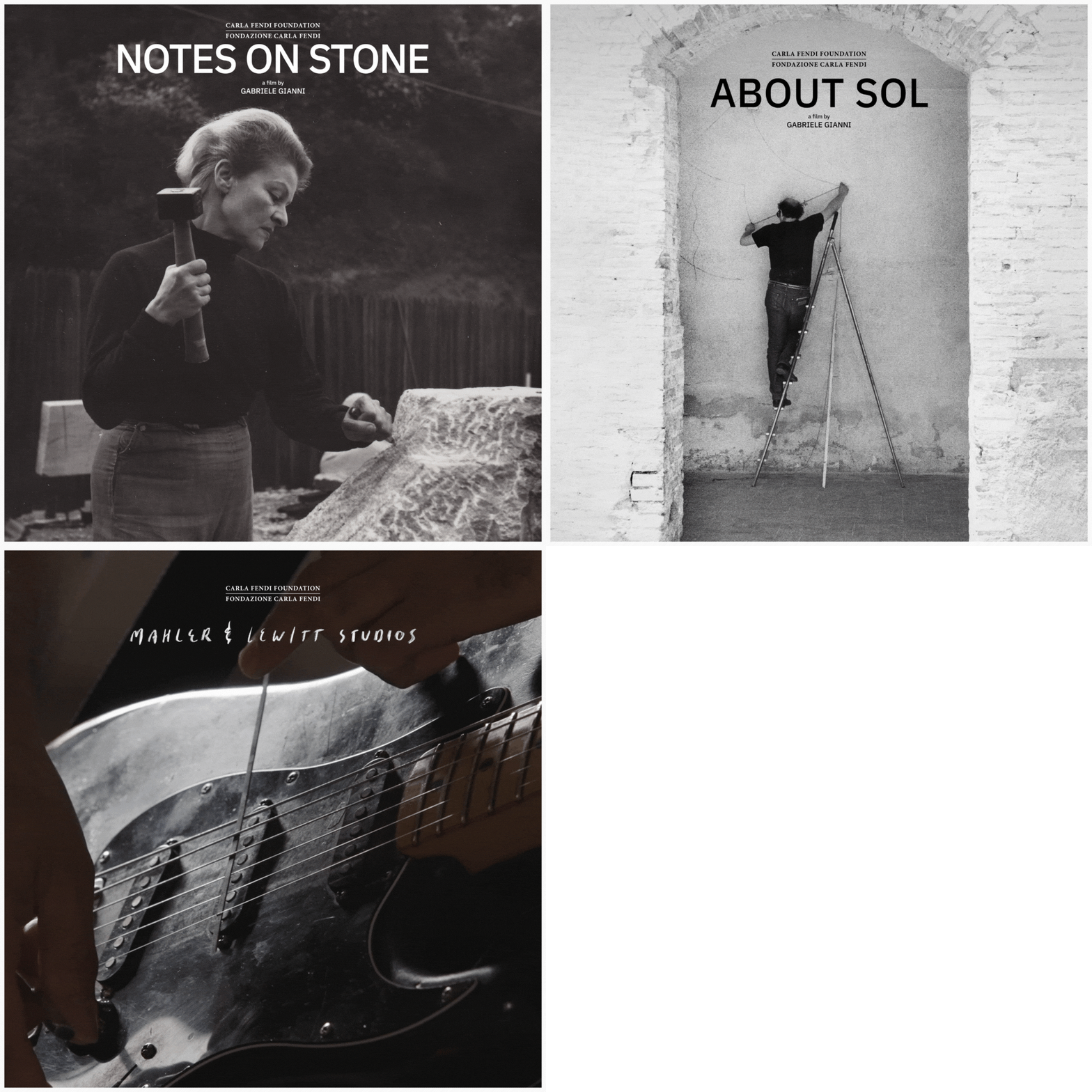
The final stop of the journey was the Carandente Museum at Palazzo Collicola. Five ground-floor rooms were dedicated to the project: the Sol LeWitt Room, entirely frescoed by the artist, the adjacent Video Rooms, which hosted continuous screenings of the Foundation’s documentary films on Sol LeWitt and Anna Mahler (About Sol and Notes on Stone), as well as a video on the activities of the Mahler & LeWitt Studios (also shown in the Arena-Cinema Proiezioni), the Mahler & LeWitt Rooms, where works created by the Studios’ resident artists were displayed, including Lina Hermsdorf’s video installation and Tai Shani’s short films from The Neon Hieroglyph cycle. The museum also exhibited Resistenze by artist Josè Angelino, curated by Davide Silvioli, organized by the Alessandra Bonomo Gallery, and produced in collaboration with the Carla Fendi Foundation and the Mahler & LeWitt Studios.