TOWARDS THE RESTORATION
1ST JULY 2012
EX BATTISTERO DELLA MANNA D'ORO - SPOLETO
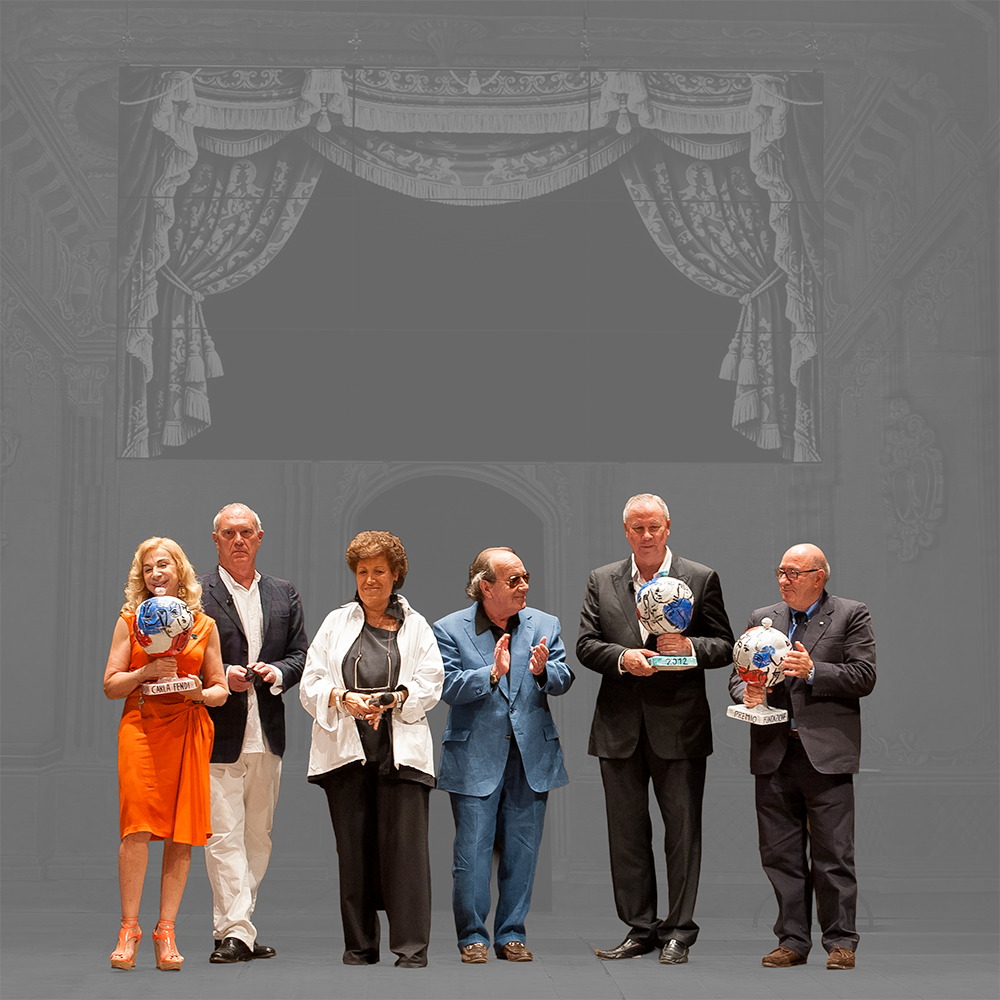
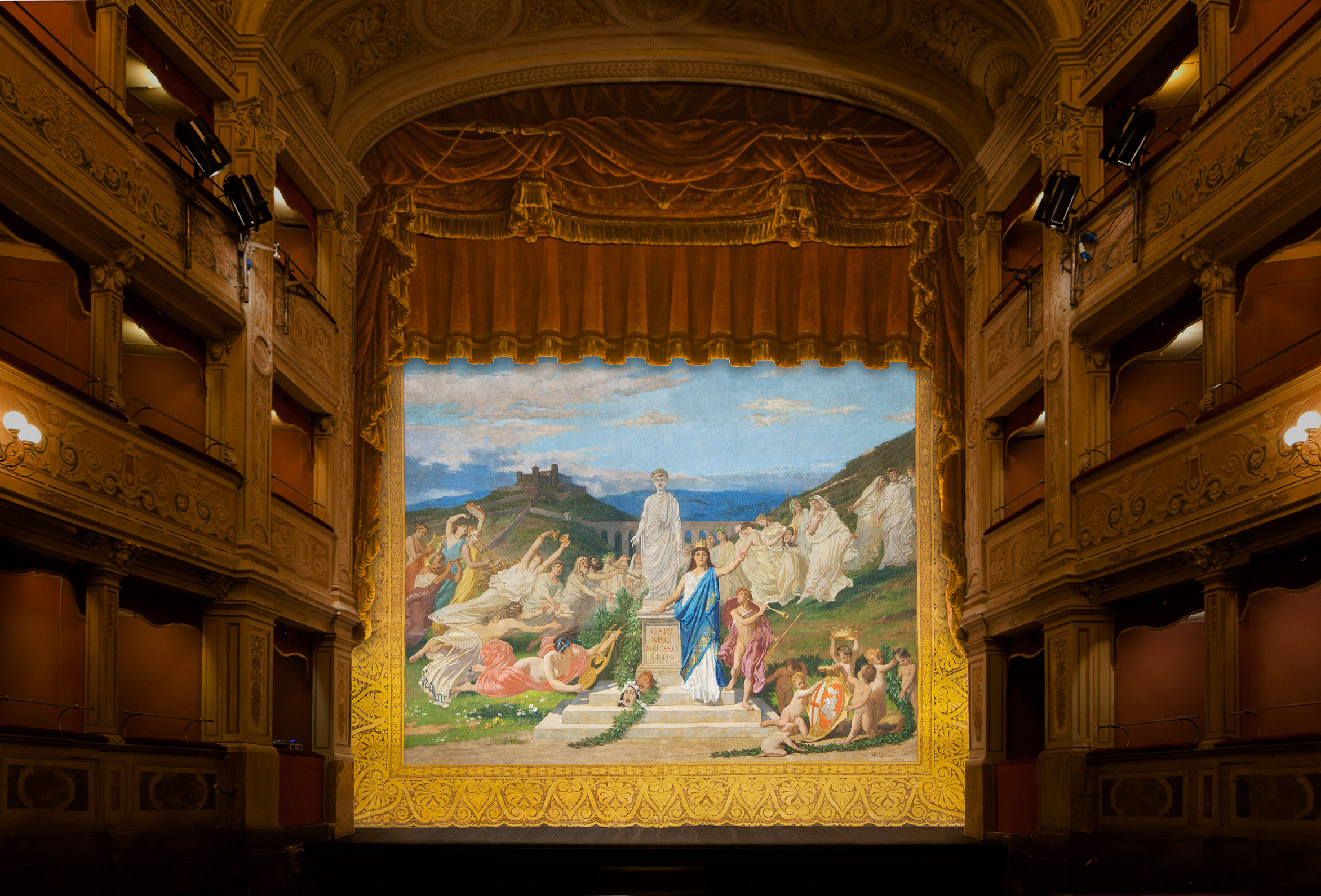
A Theatre Minute performance and an exhibition allowed the audience of the Spoleto Festival to admire the newly restored historic curtain of the Caio Melisso Theatre, depicting The Apotheosis of Caio Melisso, along with the stage setting of the so-called "Camera Ricca", including its wings, valances, and backdrops. This milestone marks a significant stage in the restoration project pursued by the Carla Fendi Foundation since 2010 to restore the theatre’s original functionality and splendor. A long-time friend of Maestro Giancarlo Menotti, a devoted attendee of the Festival of Two Worlds, and a passionate lover of theatre, Carla Fendi decided to support the restoration of the Caio Melisso Theatre through the financial backing of her Foundation. The Foundation formalized an agreement with the Municipality of Spoleto for the refurbishment of the theatre, based on a project including upgrades to the technical systems, safety improvements to the orchestra pit, and the restoration of the decorations, curtains, and historic stage wings. In tribute to its patron, the name of Carla Fendi was added to the theatre’s original name.
THEATRE MINUTE
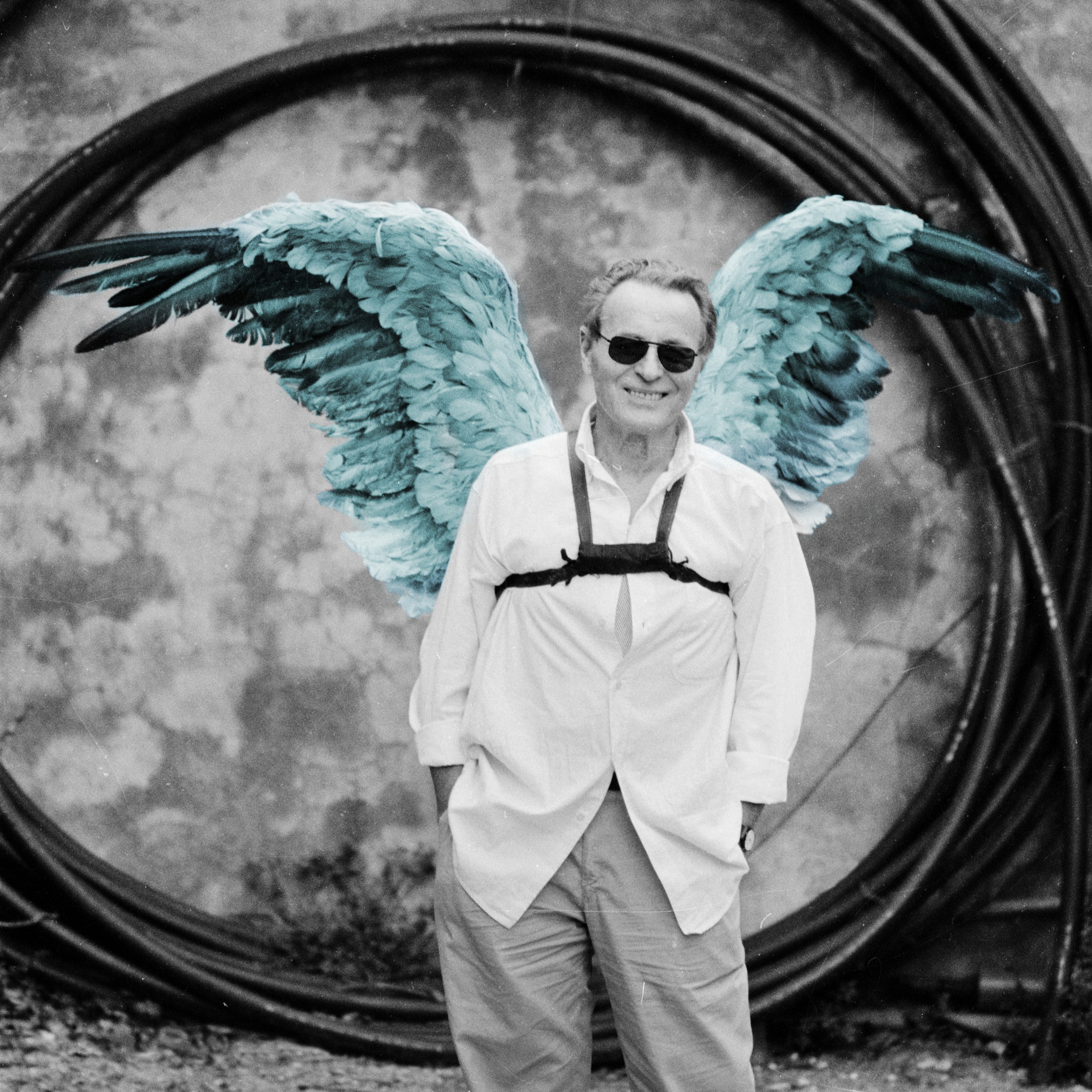
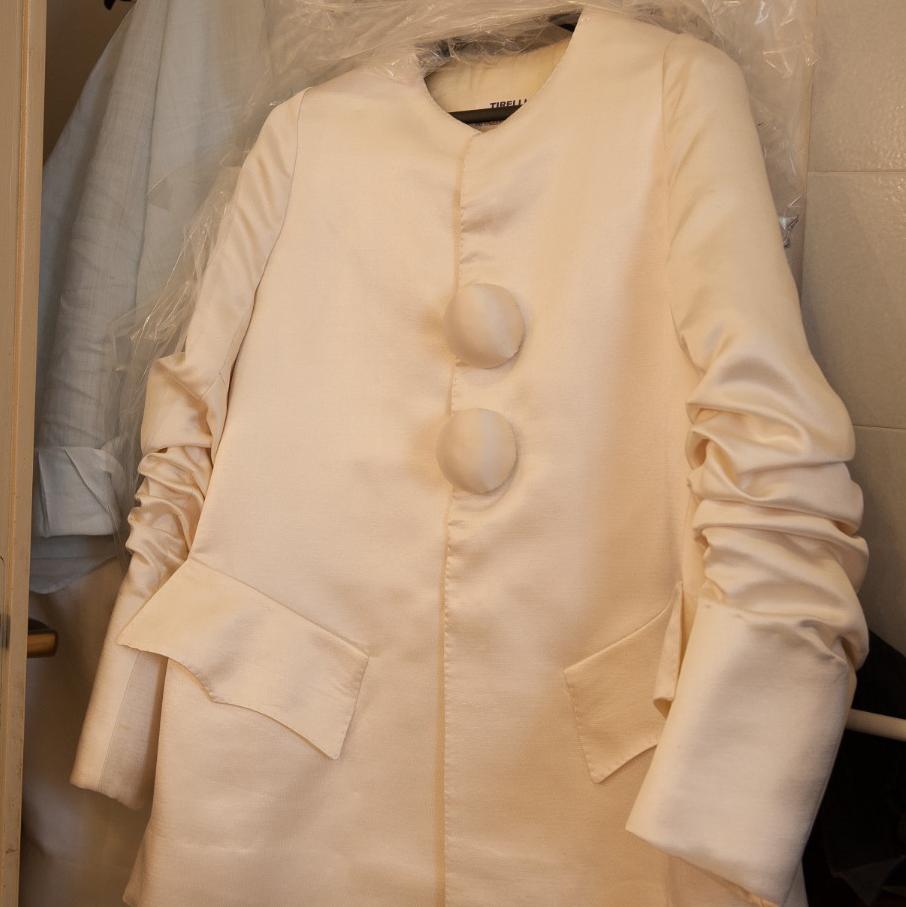
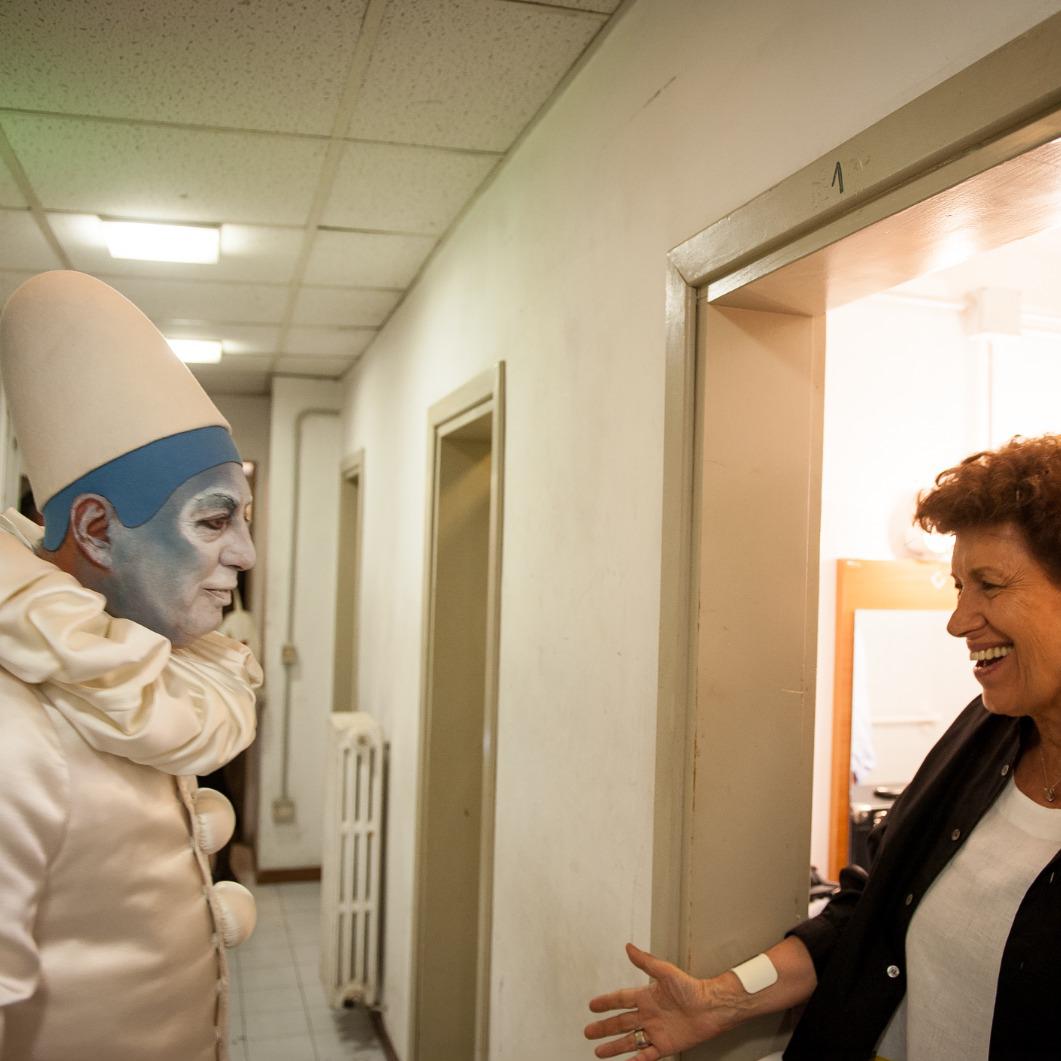
A Theatre Minute performance combining music and spoken word curated by Quirino Conti, allowed the audience of the Spoleto58 Festival of Two Worlds to once again admire the curtain depicting The Apotheosis of Caio Melisso and the complex stage setting of the Camera Ricca, one of the theatre’s greatest treasures. Italian art historian and critic Philippe Daverio appeared as the Narrator, Italian actor Peppe Barra performed La Maschera wearing a costume designed by Academy Award costume designer Piero Tosi, while Paolo del Vecchio on guitar and Massimiliano Sacchi on wind instruments took to the stage with musical consultancy by Italian composer and conductor Alessio Vlad. Of late seventeenth-century origin, the Teatro Caio Melisso has undergone many vicissitudes over the centuries and has come down to us in its current nineteenth-century appearance thanks to renovations carried out by Giovanni Montiroli between 1877 and 1880. After a long period of neglect, Giancarlo Menotti found the theatre downgraded to a cinema and, on his initiative, restoration work was undertaken to return the building to its original function. In 1958, the Maestro made the Caio Melisso one of the central venues of the first edition of his Festival of Two Worlds, and its reopening with Verdi’s Macbeth marked its full return to life.
.jpeg)
.jpeg)
.jpeg)
DIGITAL EXHIBITION
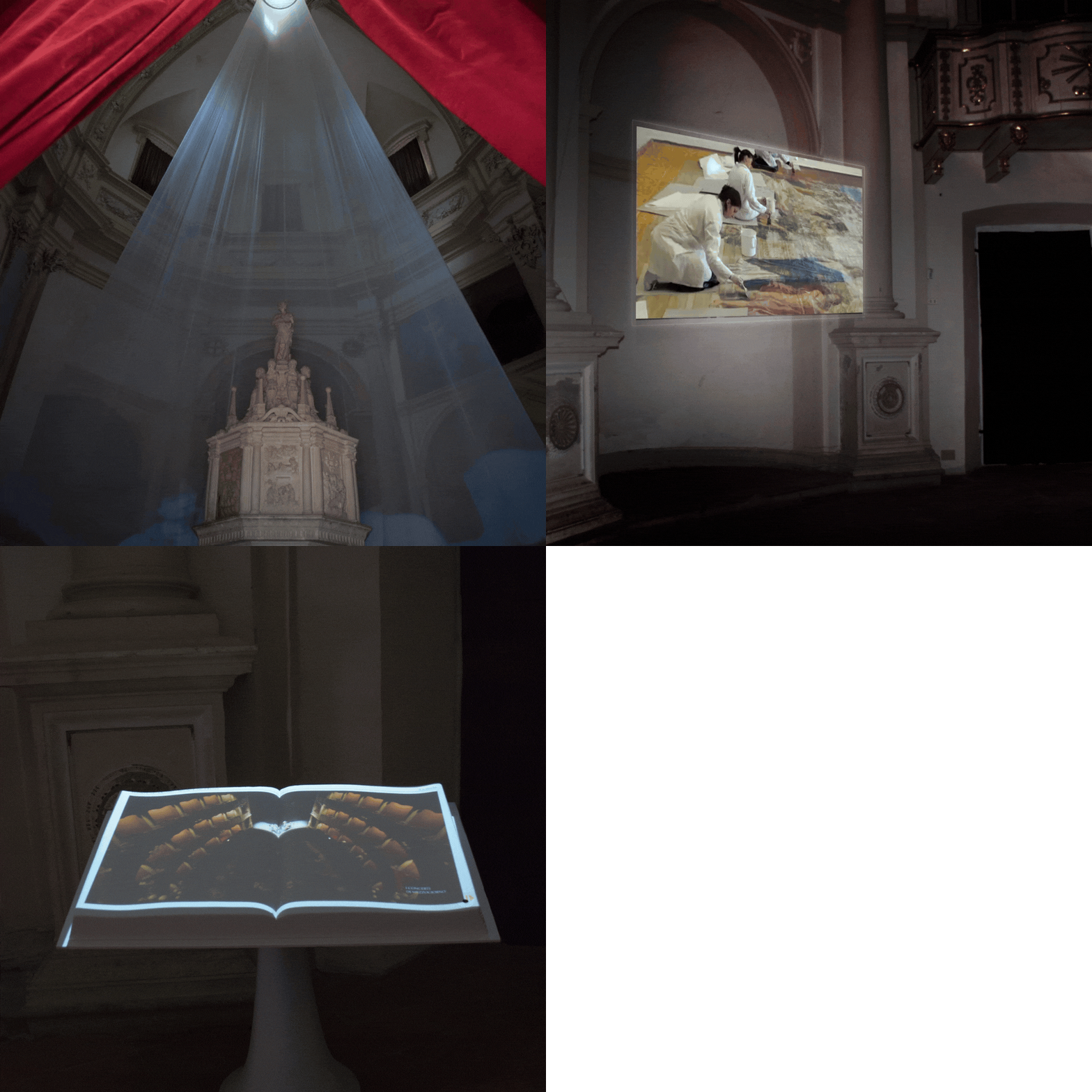
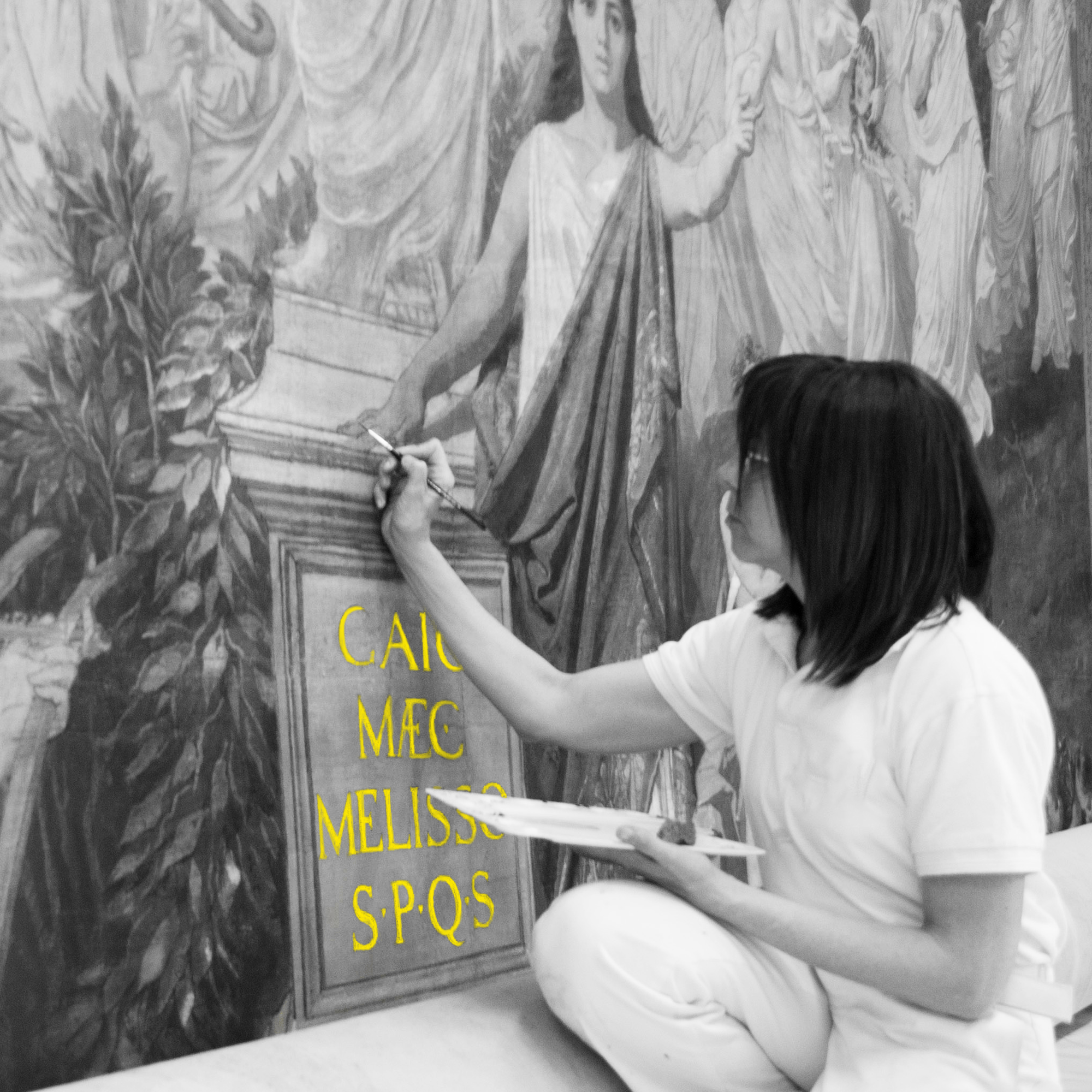
The digital exhibition set up in the former Baptistery of the Manna d’Oro bears witness to the complexity of the restoration work, carried out by a skilled local artisans. In the exhibition design, nothing was conceived as tangible: a beam of light breaks through from the lantern suspended from the apex of the dome; images of past performances staged at the theatre flow across the screens; and projections on the walls document the restoration underway. Even the large photographic book available for visitors to consult is conceived as a virtual installation. As early as 2011, the renewed theatre foyer was unveiled, after which work continued on the "Camera Ricca", the elaborate stage setting designed by architect Giovanni Mottironi around 1874, composed of multiple wings framing the backdrop. This perspective depth, typical of Italian stage design, is rendered through a sequence of draperies with gilded trimmings, themselves subject to restoration, along with the original wooden frameworks. The curtain depicting The Apotheosis of Caio Melisso by Domenico Bruschi (1879), representing the Arts and Poetry, also required the recovery of its painted surface in order to restore its original functionality, and was therefore restored by reinforcing the canvas through re-stretching interventions on the reverse.