
RESTORATION WORK OF THE TEATRO CAIO MELISSO
The historic Teatro Caio Melisso in the heart of Spoleto has been restored to its original ancient magnificence thanks to a long and meticulous restoration process initiated by Carla Fendi herself and completed over five years by the Foundation. In honor of its benefactor, the theatre has been renamed Teatro Caio Melisso Carla Fendi.
Having withstood countless historical events and served as the stage for many performances of the Spoleto Festival Dei Due Mondi, by the early 2000s the Teatro Caio Melisso was clearly in need of comprehensive restoration. In 2010, Carla Fendi undertook an ambitious project to restore and upgrade the theatre’s facilities, carried out in collaboration with the Municipality of Spoleto and the Umbria Region. This project made a significant contribution to strengthening the deep bond that, since the time of Giancarlo Menotti, has linked Carla Fendi to the city of Spoleto and its Festival.
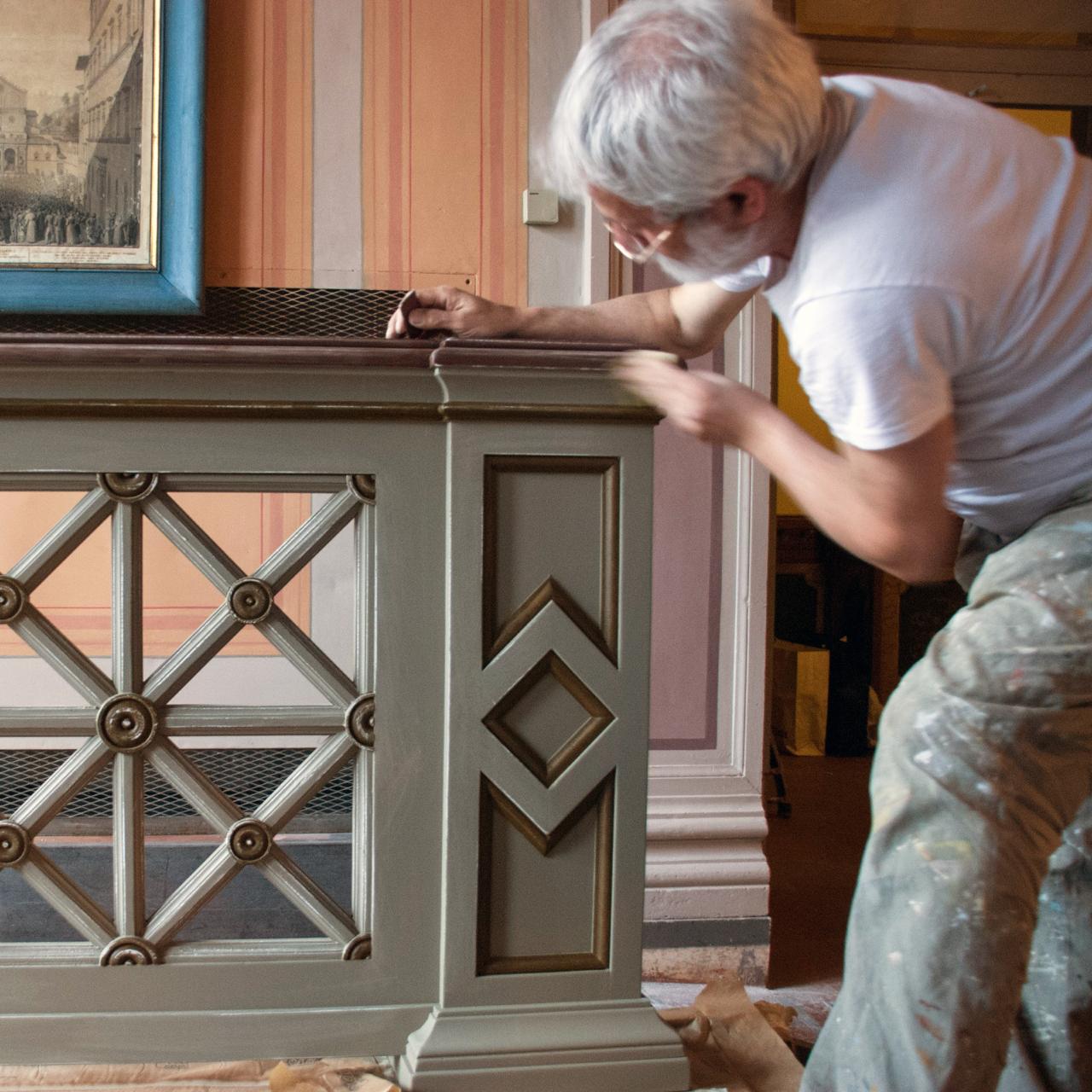
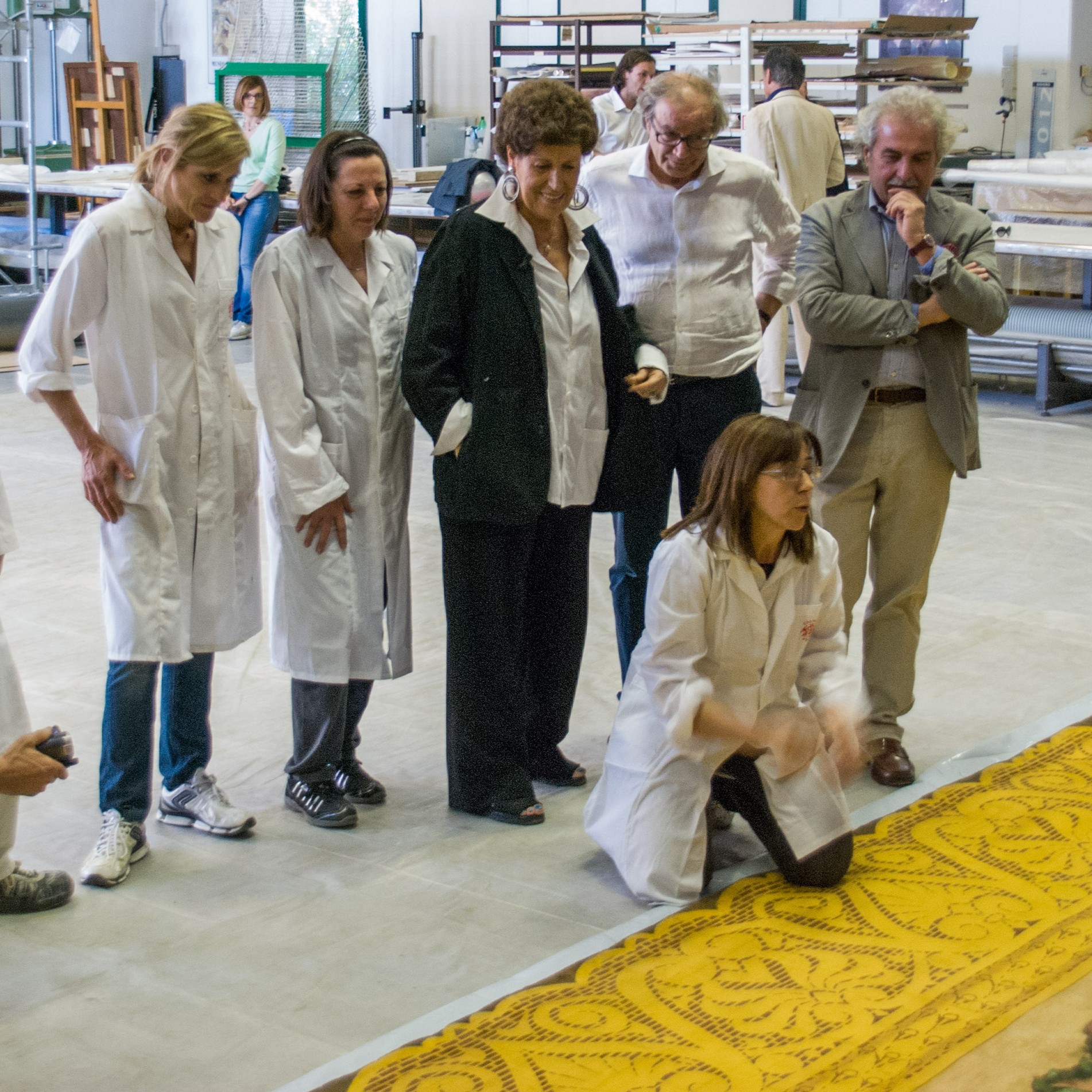
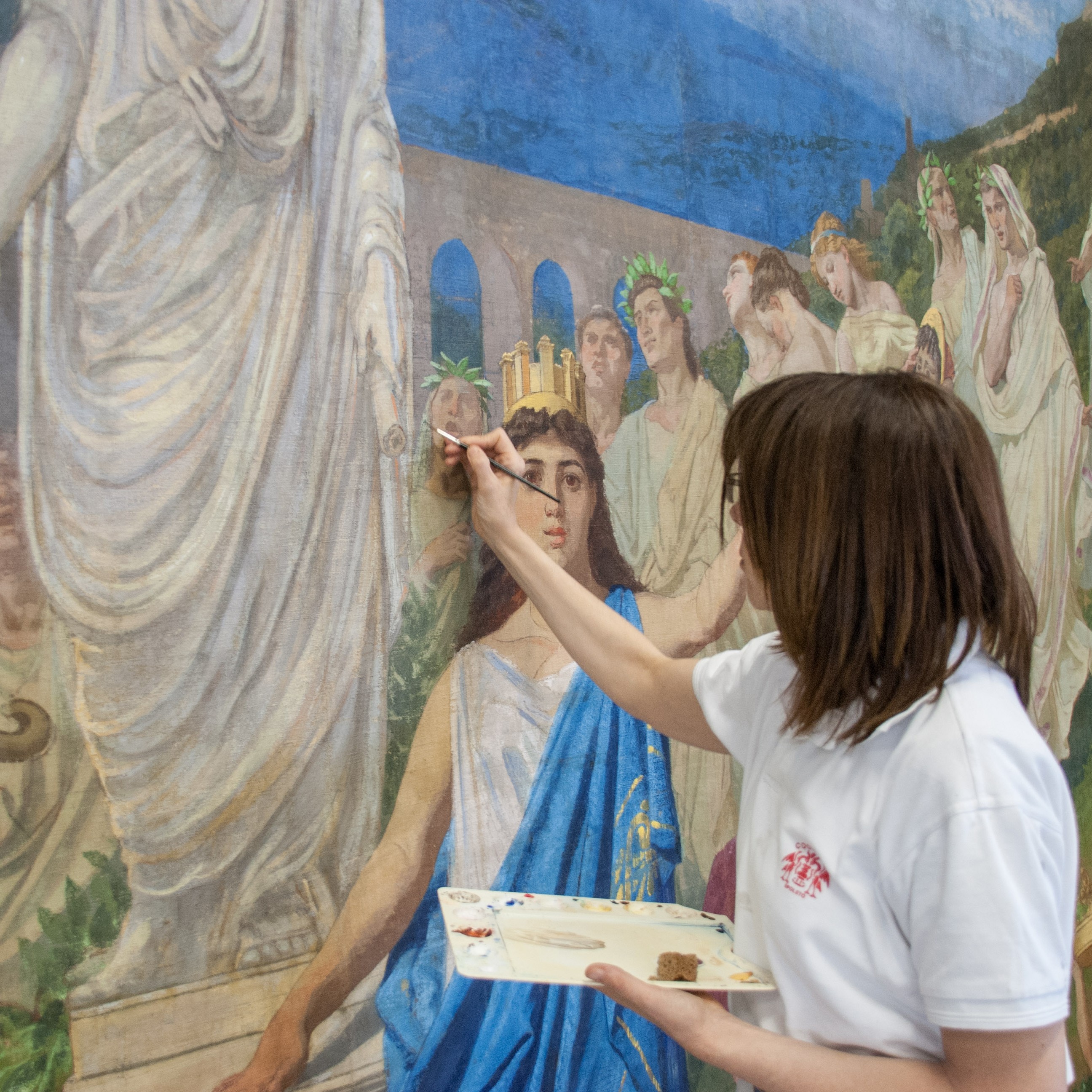
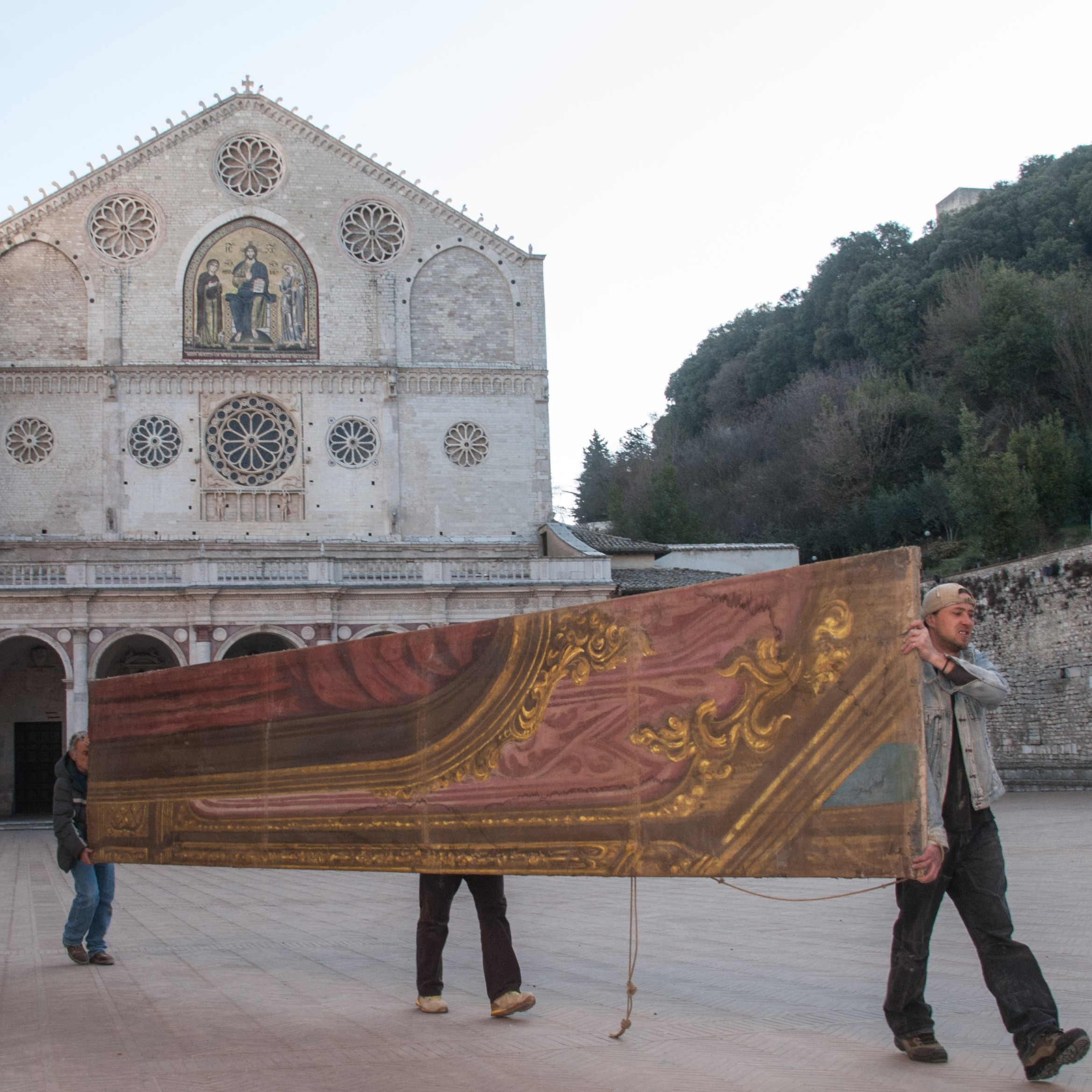
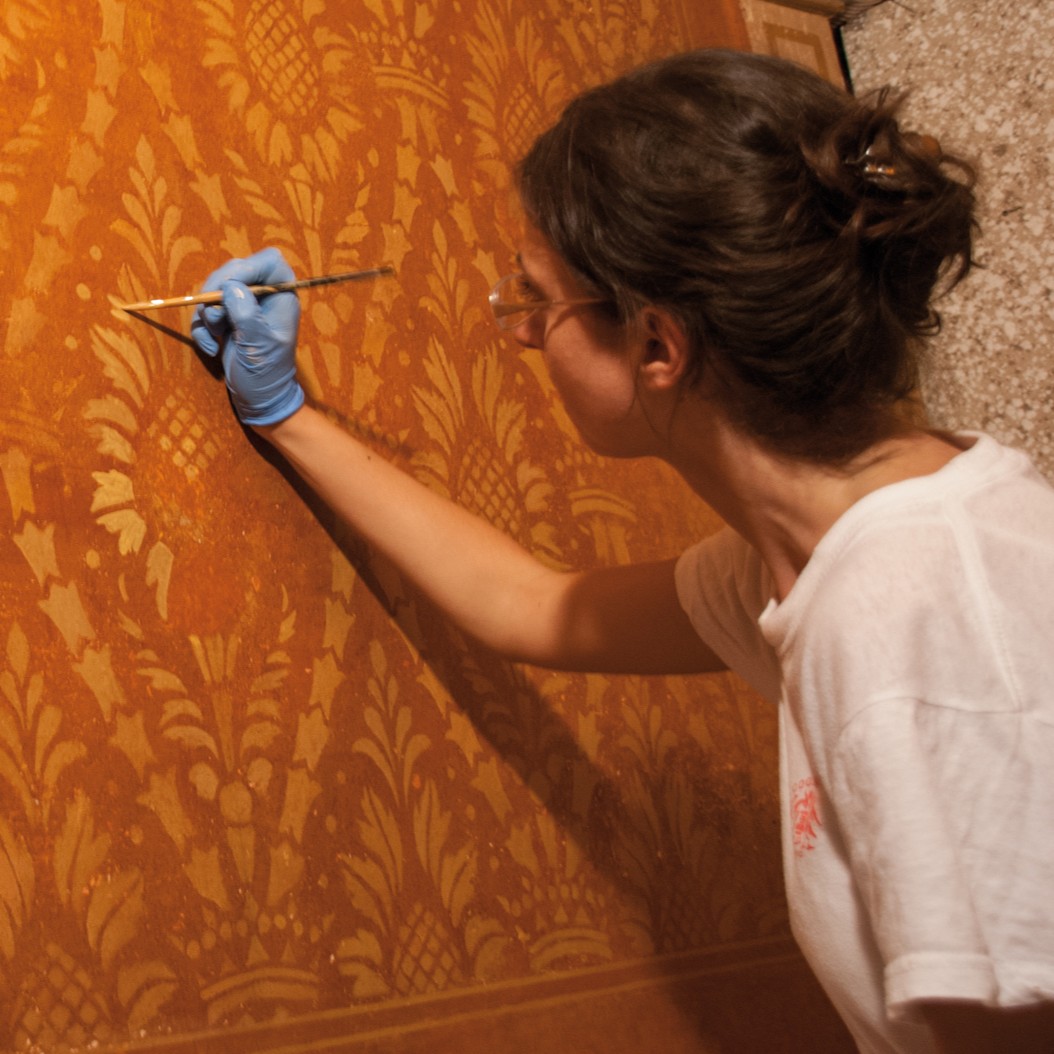
THE RESTORATION
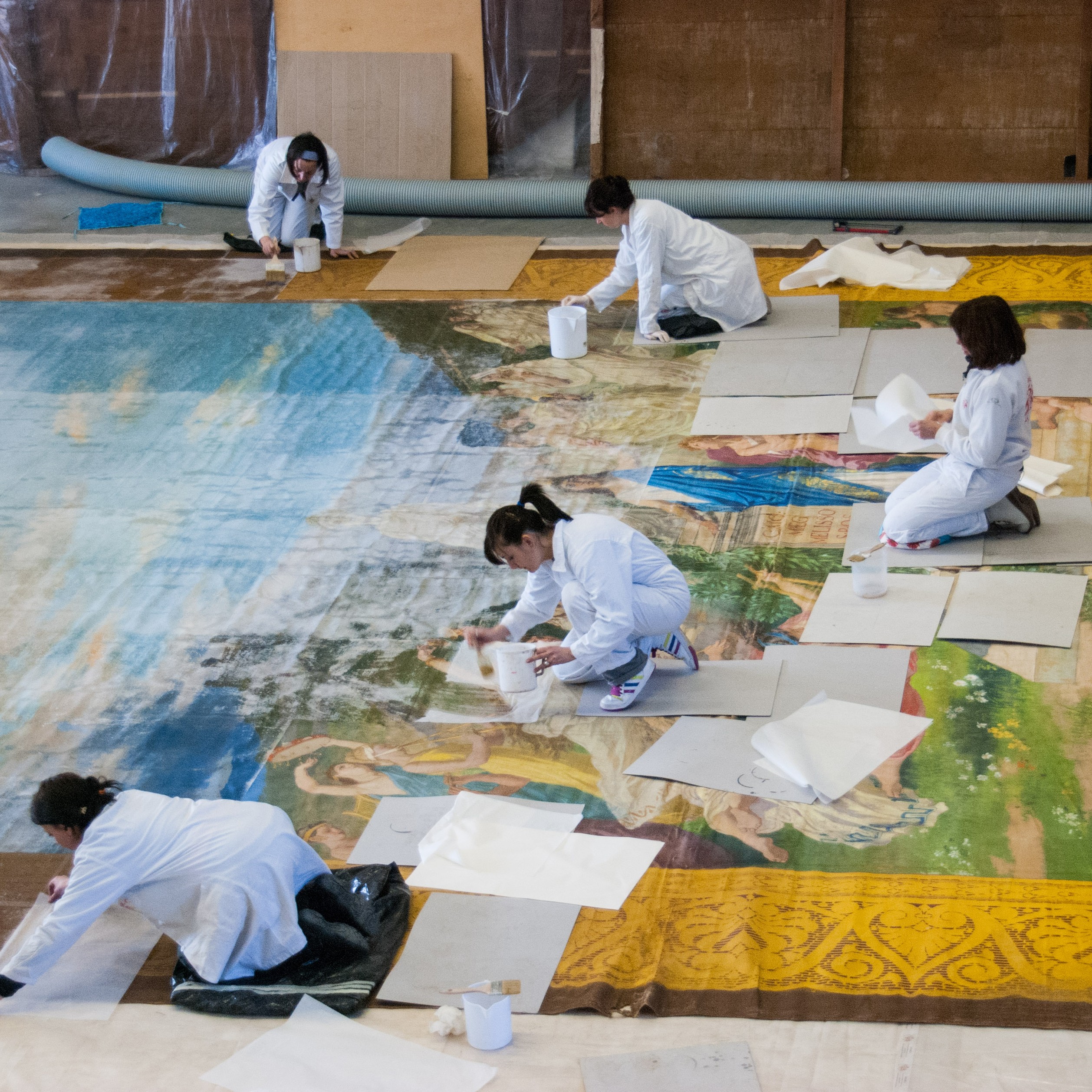
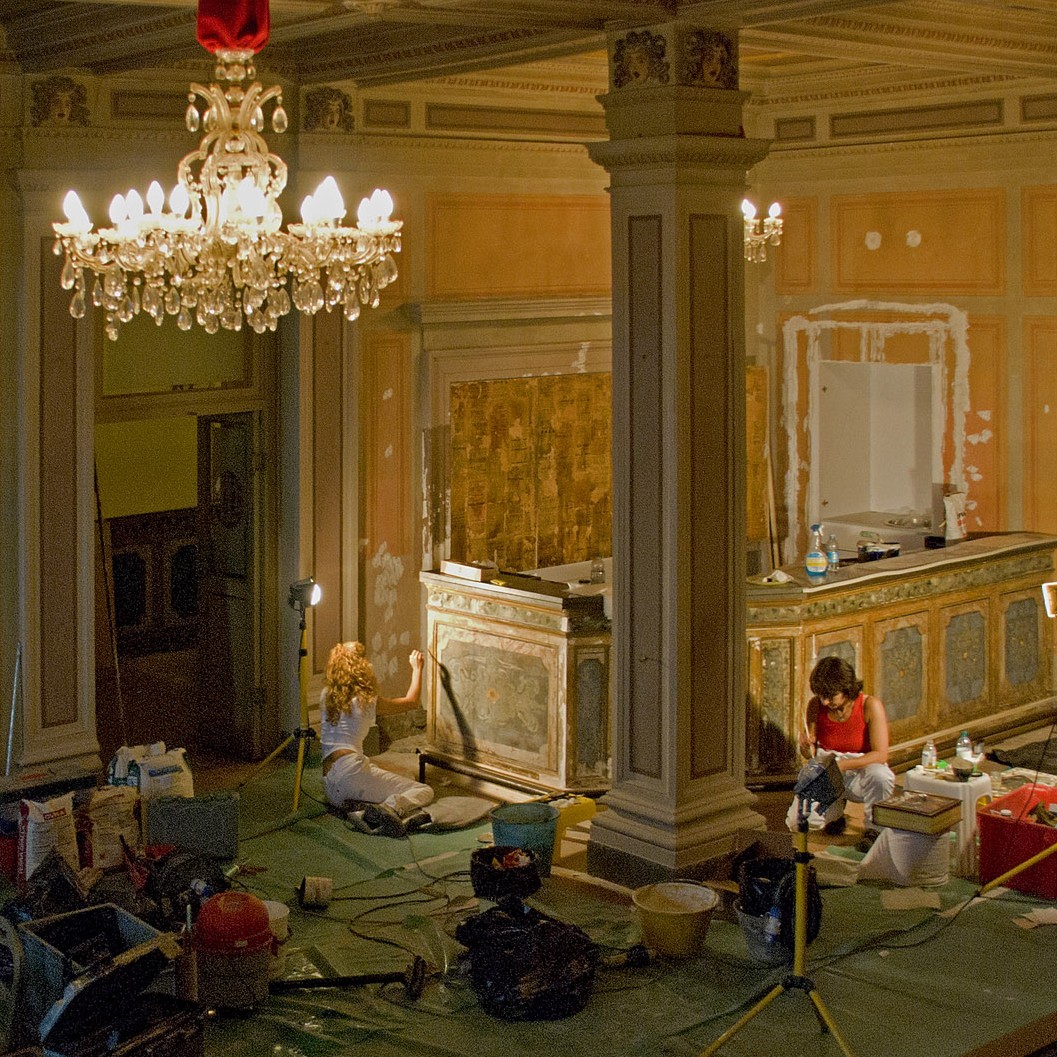
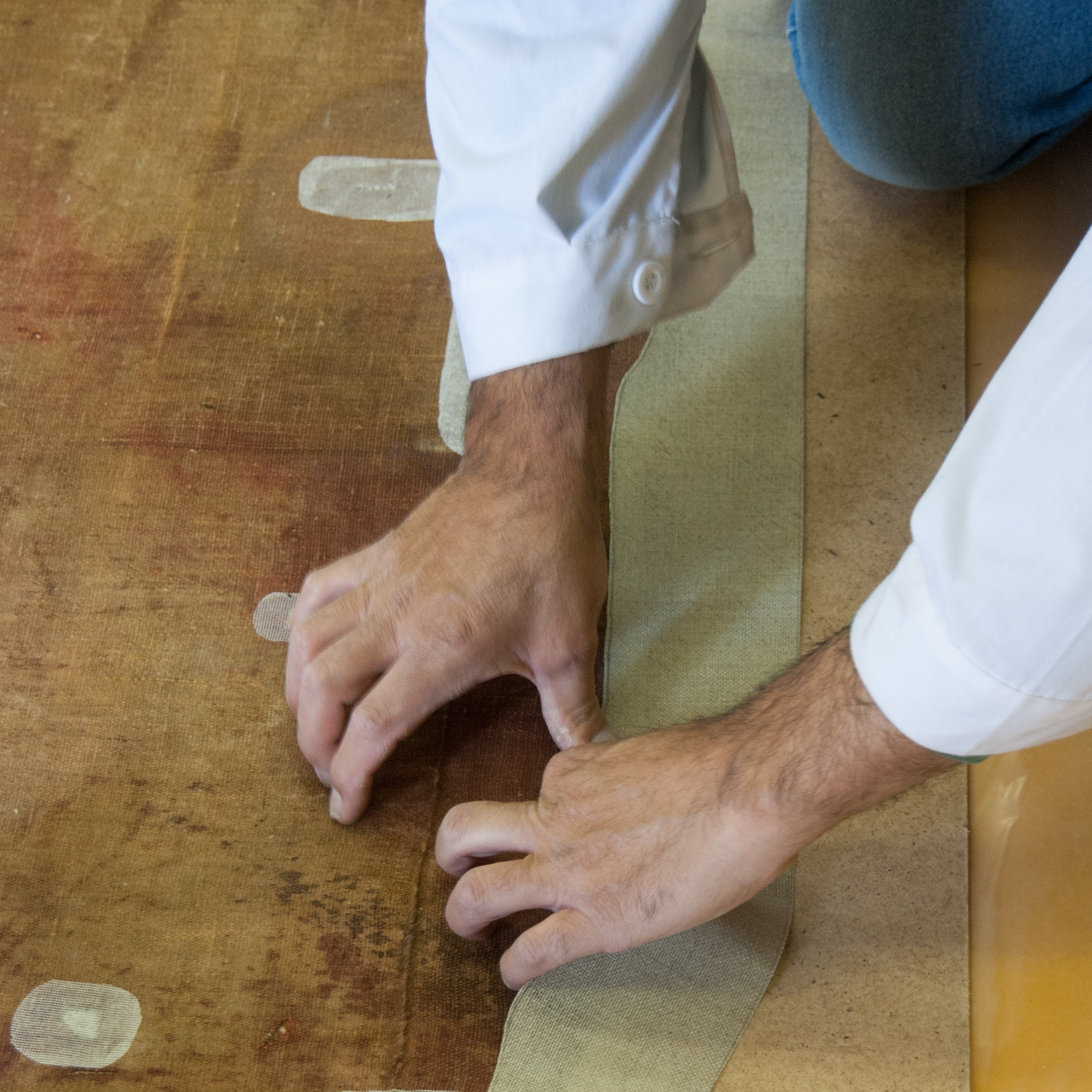
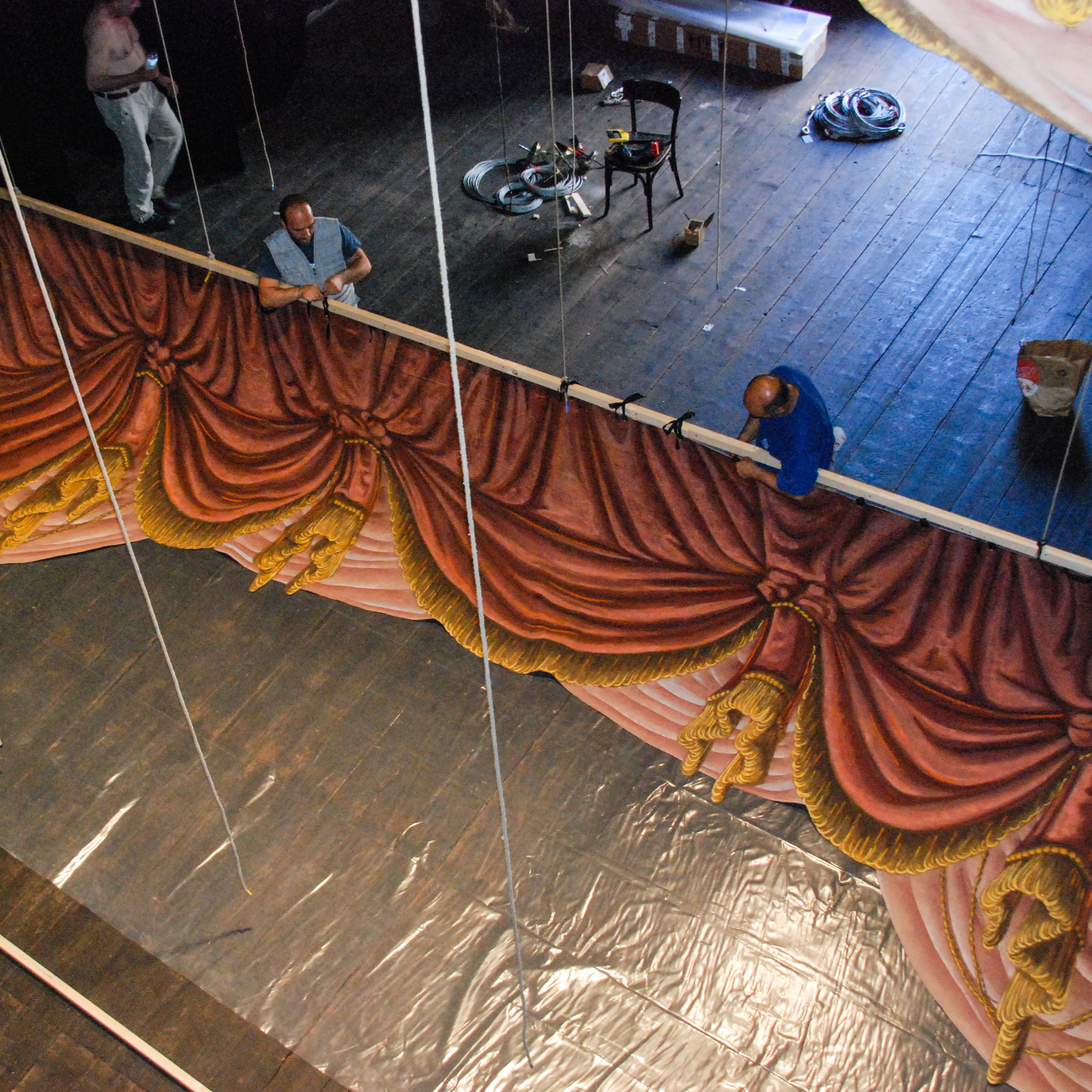
The project was the result of a synergy between public and private institutions, built on careful historical and philological research. After two initial years devoted to handling bureaucratic procedures, the restoration was completed in 2015. Carla Fendi followed the project with great personal involvement and interest, expressing appreciation for both the artistic value of the works and the technical expertise of the craftsmen and specialists involved, who gradually brought them back to their original beauty. Throughout its various stages, the restoration work revived the foyer, the atrium and ticket office (2011); the original 1879 stage curtains with The Apotheosis of Caio Melisso and the backdrop of the Camera Ricca or Concert Hall, designed by Giovanni Montiroli and painted by Domenico Bruschi, which with its wings and valances, provides a striking stage setting (2012); the Royal Box and the adjoining Reception Room, the valances (2013); the proscenium friezes and orchestra pit, the general stage wings, ceilings, backdrops, and blackout curtain (2014); the stalls and armchairs, stage, scenic systems, logistical structures, and services (2015).
SURPRISING EVOLUTIONS
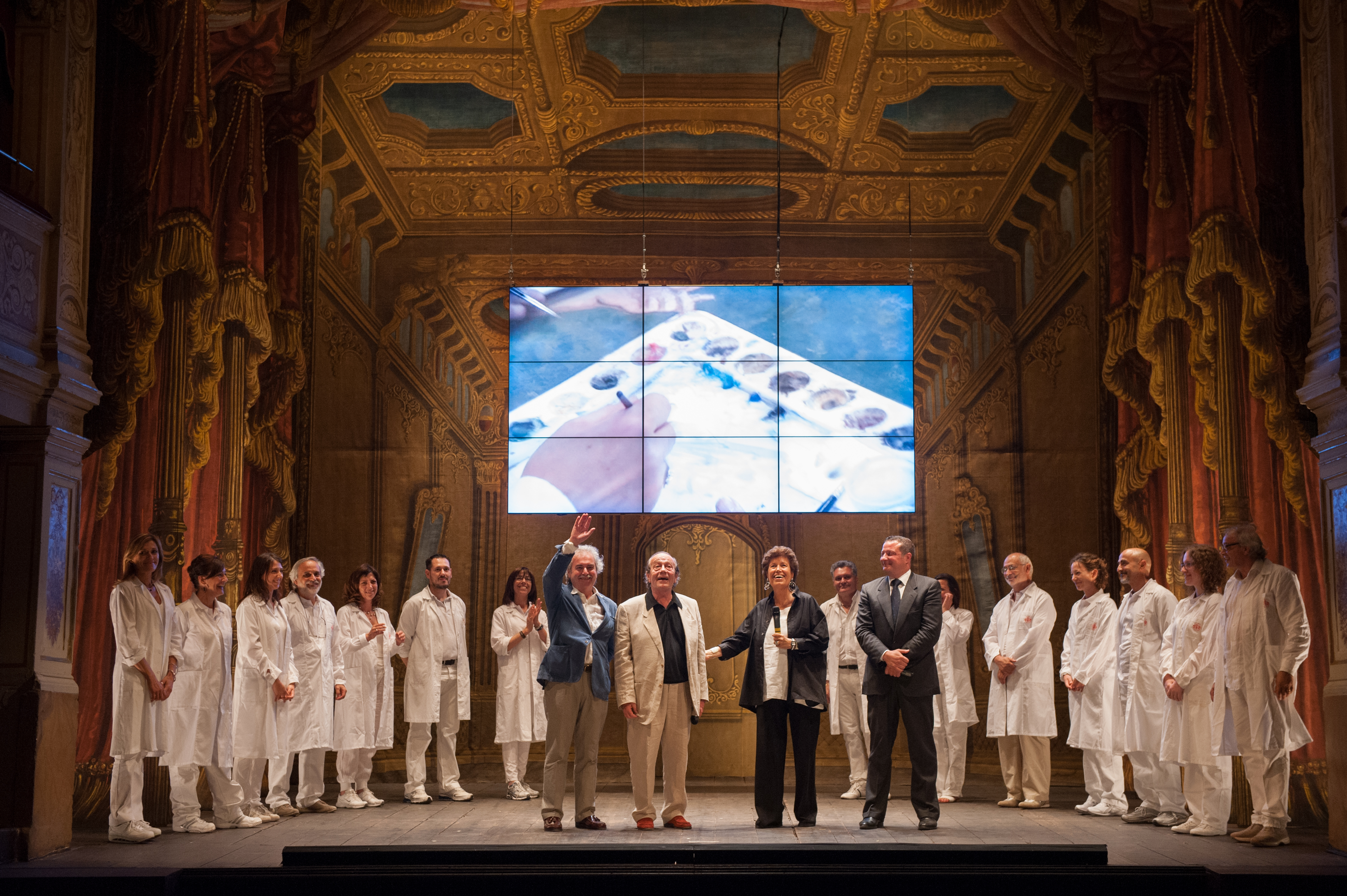
During Spoleto58 Festival dei Due Mondi, and marking the conclusion of the final phase of its five-year restoration, the Teatro Caio Melisso Carla Fendi was returned to the city in its original splendor, also celebrated through a special event staged by the Foundation on the closing day of the Festival.
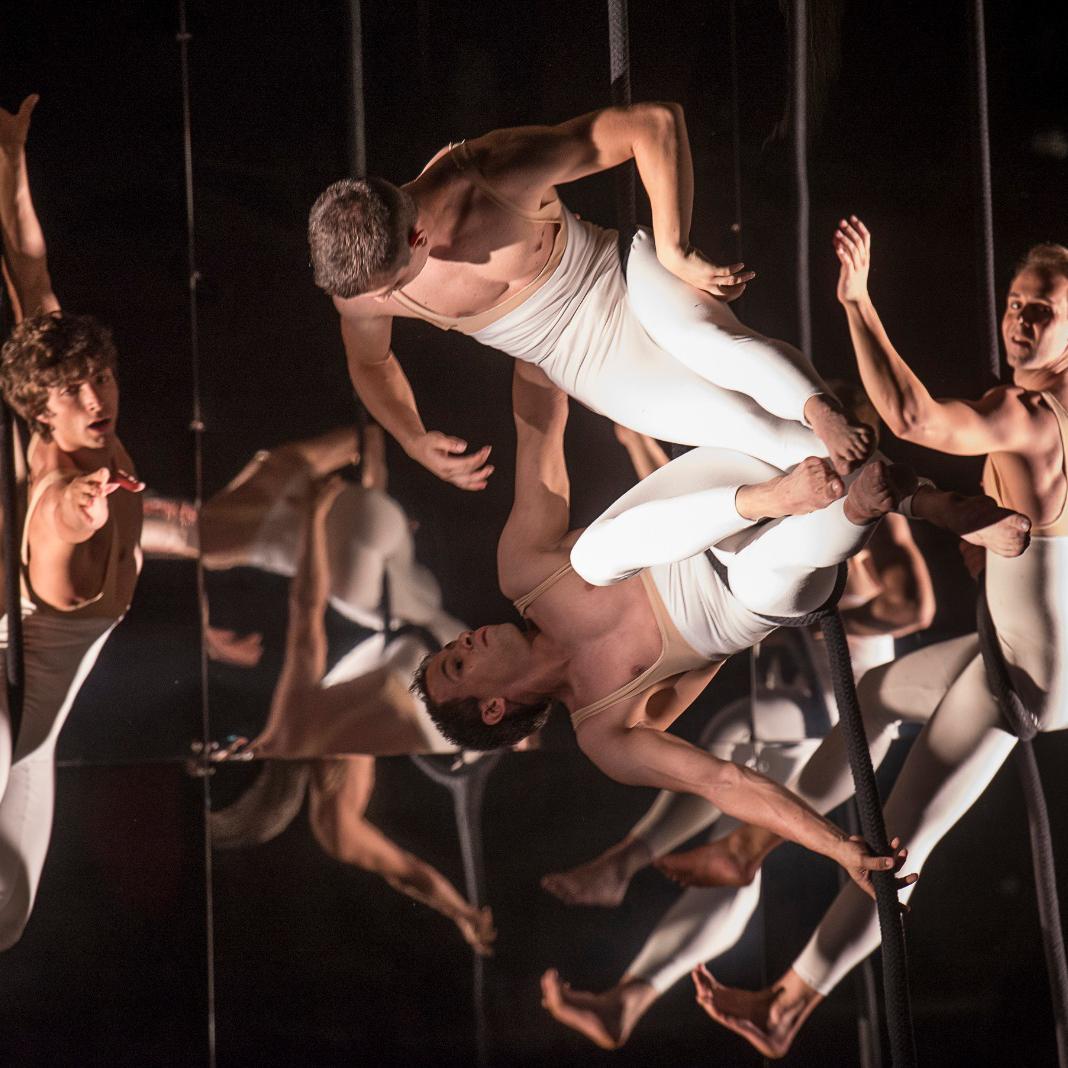
Amid restored decorative friezes and extraordinary stage sets returned to their original brilliance, the acrobatics company of the Reale Società Ginnastica di Torino ( (RSGT) performed Surprising Evolutions, an aerial performance of striking visual impact, choreographed by Alexandre del Perugia. The Reale Società di Ginnastica di Torino is one of the oldest sports associations in Italy, founded in the mid-nineteenth century by the Swiss Rodolfo Obermann. Over time, RSGT has played a significant role not only in the field of sport, but also in the dissemination of physical education in the nineteenth century, promoting inclusion, youth education, and the spread of movement culture through sport and the circus arts. At the end of the event, a tribute was paid to the protagonists of this years-long restoration project, who, appearing from the theatre’s boxes, were greeted with warm applause from the audience.

The people of Spoleto have loved theatre since ancient times. The stanzone per le commedie, located between the Cathedral and the Church of the Manna d’Oro, was the venue where theatrical performances were once held. At the end of the 17th century, the city established a proper theatre, a wooden structure with four tiers of boxes where the works of many Spoleto-based playwrights of the time were performed. The Teatro Nobile, one of the oldest in Italy, went through many cycles of fortune and misfortune and over time it was repeatedly renovated and enriched with decorative elements and scenic settings. However, in the early 19th century, unidentified Florentine craftsmen stripped it of its refined decorations, reducing it to such a state that some residents of Spoleto would have prefered its demolition.
The opening of the Teatro Nuovo in the mid-1800s dealt another blow to the Teatro Nobile, which was then abandoned. But then came the rebirth: a few years later, the Municipality of Spoleto began an extensive restoration project, completed in 1880 by architect Giovanni Montiroli, with new decorations, friezes, and a new name: Teatro Caio Melisso — a tribute to the playwright Caio Melisso, friend of Maecenas and librarian of Emperor Augustus, who was born in Spoleto. In post-war Italy, marked by poverty, the theater fell into neglect again and was downgraded to a movie theater. But then came Menotti, who restored it to its original function when he created the Festival dei Due Mondi, bringing culture and glamour to Spoleto.