MYTHS AND TRANSFIGURATIONS
1ST JULY - 15TH JULY 2018
LUCREZIA BORGIA ARMORY, EX MUSEO CIVICO (FORMER CIVIC MUSEUM) -SPOLETO
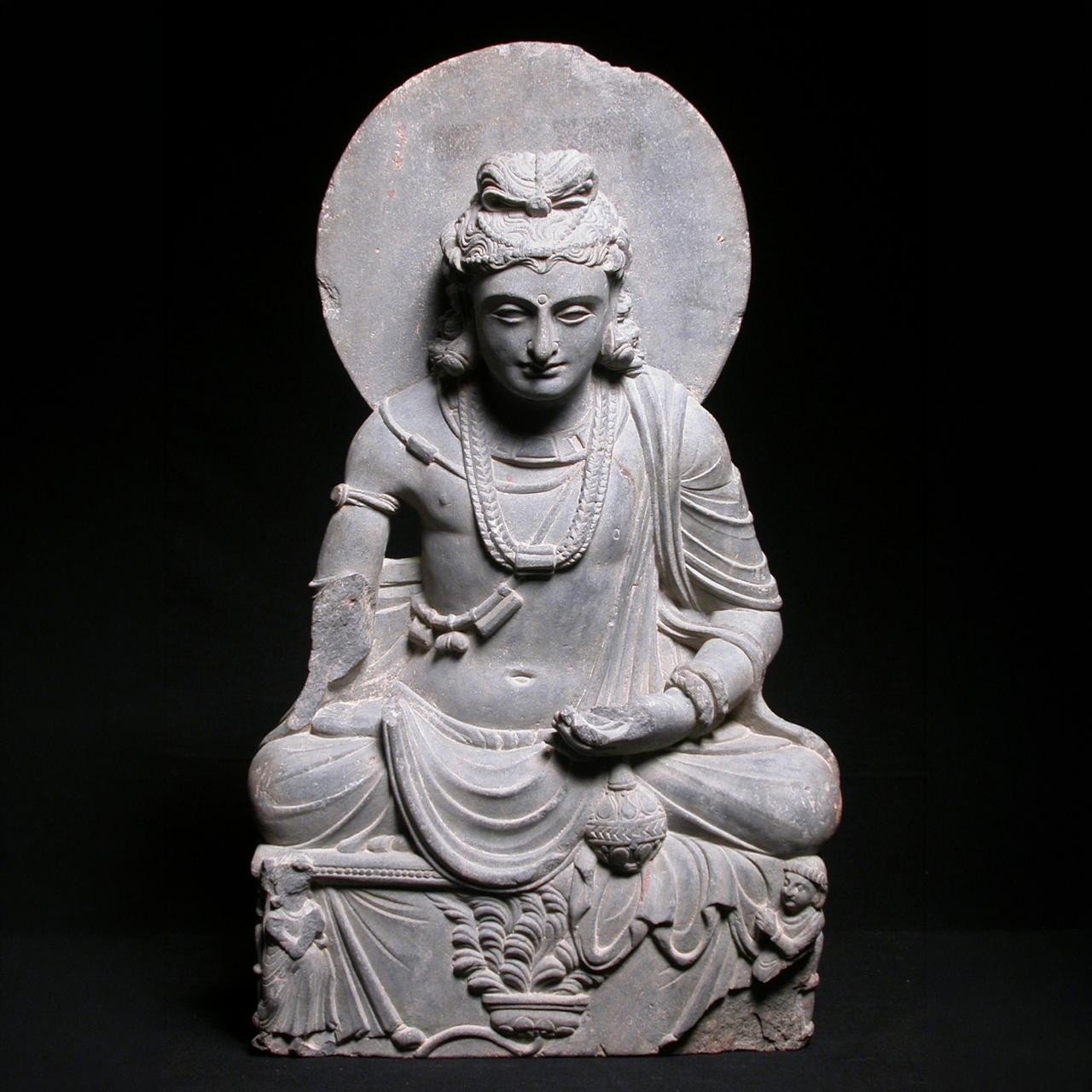
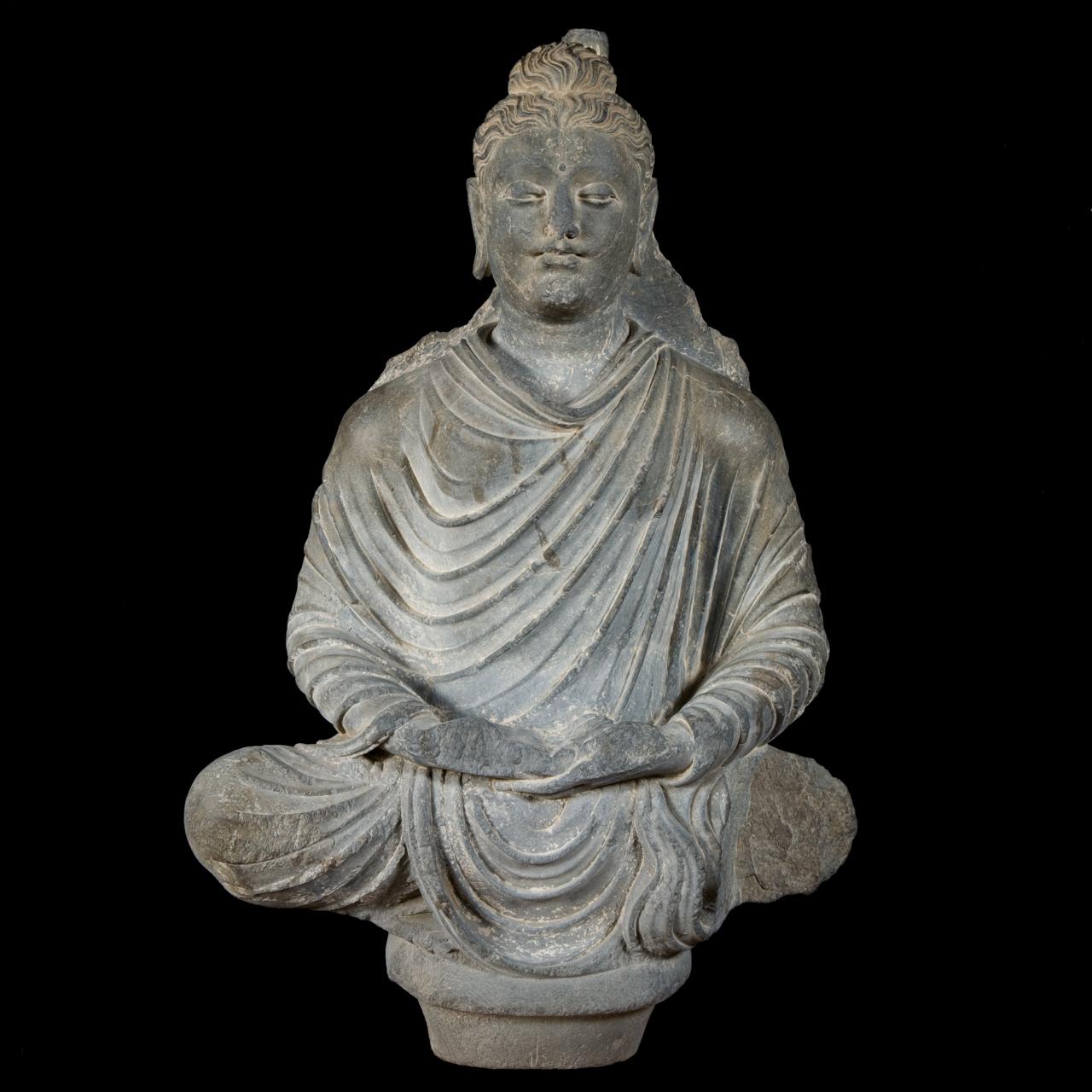
Myths and Transfigurations is part of the project The Mystery of Origin. The installation was curated by Quirino Conti, with scientific consultancy by Marco Galli and Laura Giuliano. The Oriental and Occidental worlds - even through culturally and philosophically antithetical contexts - were able to generate a universal heritage of human knowledge, rooted in the need for both spirituality and rationality, mysticism and materialism. Conceived as a timeless cave, the installation evokes both Plato’s allegory of the cave and the Indian notion of the “Passage,” according to which the Supreme Principle shines within the secret darkness of the grotto. Within this space, ancient East Asian schists (2nd–4th century AD), belonging to the art of Gandhāra — an area corresponding to present-day northern Pakistan and eastern Afghanistan — were exhibited. These include precious representations of meditating Buddhas and Bodhisattvas, from the collections of the Museo Nazionale di Arte Orientale Giuseppe Tucci (now Museo delle Civiltà) in Rome, and from the MAO (Museo di Arte Orientale) in Turin.
LOGOS AND NIRVANA
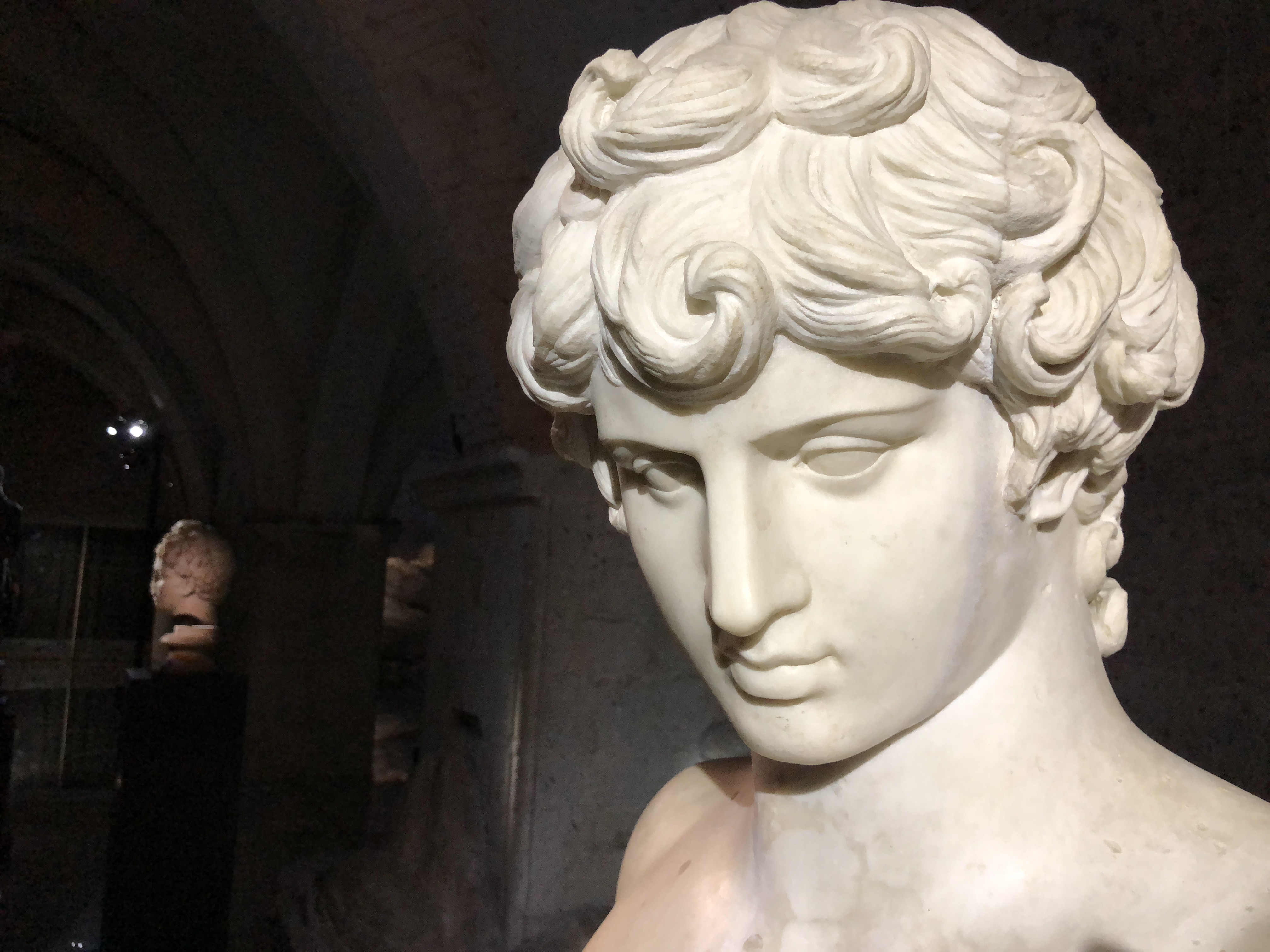
These expressions of mystical Oriental art were placed alongside classical Occidental marbles from the Greco-Roman world (2nd century AD), sourced from the collections of the Terme di Diocleziano, Palazzo Massimo, Palazzo Altemps, Parco Archeologico del Colosseo, Centrale Montemartini. These sculptures depict peculiar topoi of the Greco-Roman tradition: Dionysian rites, Apollonian religion, salvific cults such as the Mithraic sacrifice, and exponents of rational philosophy, such as the portrait of Socrates. The classical and Gandhāran images present visitors with two intellectual paths from the ancient world — between logos and nirvāna — revealing complex and reciprocal influences.

KARMA AND KOSMOS
In Buddhist cosmogony, time is conceived as cyclical — an infinite alternation of birth and death to which every being is bound by the law of karma. The symbolism of the cave refers to the infinite, and the sacred nature of the Buddha is often represented by the halo of light emanating from the Master or by the flames bursting from his shoulders.
In the Greek world, from the earliest cosmogonies, there is a prevailing attempt to construct a rational vision that unites the physical and divine realms. Myth evolves into a scientific foundation, serving as an original form of thought that ultimately conceives the universe as kosmos — an ordered self. Despite their differences, reflection on these divergent interpretations of origin reveals multiple parallels and echoes of interaction. The representation of the Gandharan Buddha shows Indian, Iranian, and Central Asian influences, but also Hellenistic-Roman elements stemming from the long-standing Greek presence in these frontier regions — for instance, the draping of the robe, reminiscent of the figure of a philosopher clad in a Roman toga or wrapped in a Greek himation.
.JPG)
MYTHRA
Another example of cultural convergence is the Mithraic cult, characteristic of the Persian and Greco-Roman worlds. Maitreya, the Buddha of the Future, bears a name that recalls the Iranian Mithra, assimilated into the Roman Sol Invictus. The image of the Buddha surrounded by flames and meditating in a cave has been compared to Roman reliefs depicting Mithras’ tauroctony — the god, associated with the sun, sacrificing the cosmic bull from whose body bees are born, a metaphor for the birth of souls. Mithras is shown within a cave whose vault often depicts the zodiac, symbolizing the universe — mirroring the Gandharan Buddhist representation of the cosmos. The element of light also expresses a shared universal value: that of Enlightenment, the Luminous Principle that overcomes darkness — a belief shared by various peoples across the Eurasian continent during the first centuries of the Christian era and linked to the idea of a Savior. For millennia, humankind has fastened every hope to the stars, seeking in them figures and creatures from a more powerful and better world — until knowledge began to reveal their nature, but never their secrets.